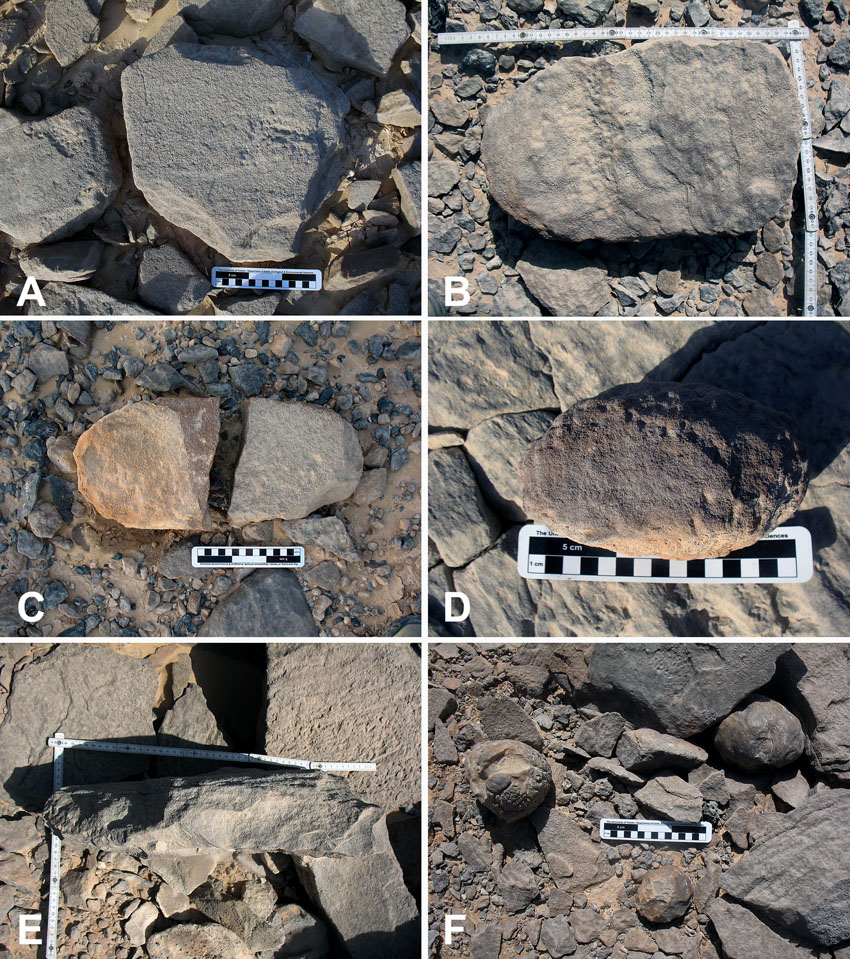
Artefacts in the grinding stone quarries. A) and B) Broken lower grinding stone rough-outs. These are the most common artefacts in the quarries, C) Rare example of elongated, oval rough-out, D) sandstone, E) Photo indicating thickness (ca. 10 cm) of a lower grinding stone rough-out, F) Flint hammerstones in the quarries. Small scale is 15 cm long,
folding carpenter’s ruler 50 cm in each direction. Photos: Per Storemyr.
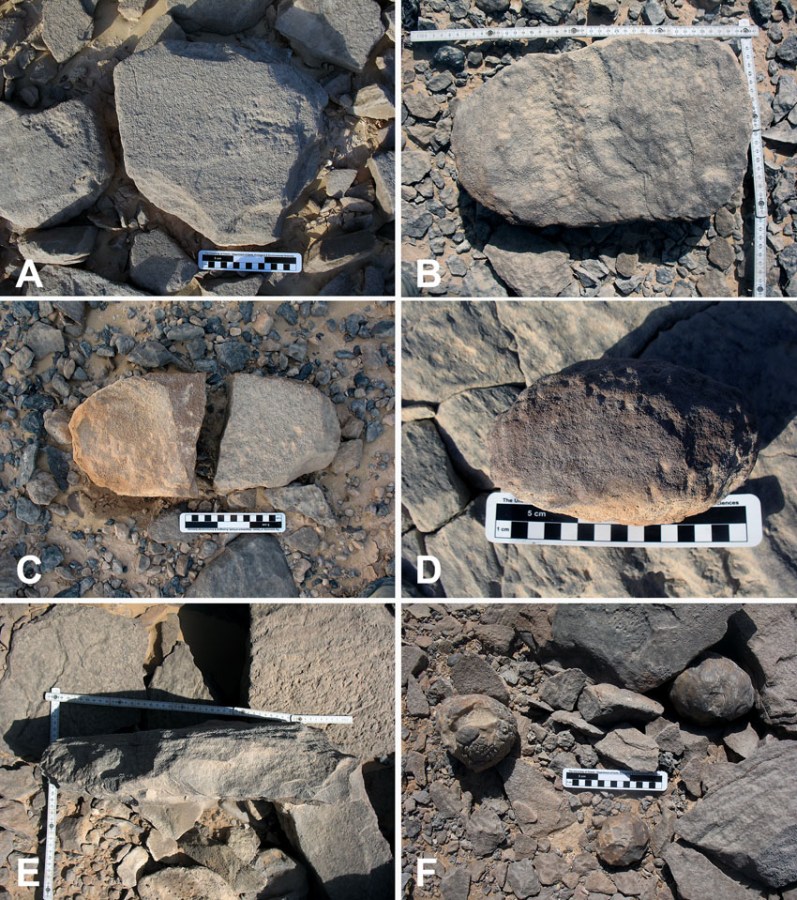
Artefacts in the grinding stone quarries. A) and B) Broken lower grinding stone rough-outs. These are the most common artefacts in the quarries, C) Rare example of elongated, oval rough-out, D) sandstone, E) Photo indicating thickness (ca. 10 cm) of a lower grinding stone rough-out, F) Flint hammerstones in the quarries. Small scale is 15 cm long, folding carpenter’s ruler 50 cm in each direction. Photos: Per Storemyr.
Discover more from Per Storemyr Geoarchaeology & Conservation
Subscribe to get the latest posts sent to your email.
 Per Storemyr Geoarchaeology & Conservation