Soapstone in the Far South of Norway (I): The Sparsås Iron Age Quarry

The Sparsås soapstone quarry in Southern Norway, with carved out vessel blanks attached to the bedrock and highly organised spoil heaps in the background. Photo by PS

The Sparsås soapstone quarry in Aust-Agder, with carved out vessel blanks attached to the bedrock and highly organised spoil heaps in the background. Photo by PS

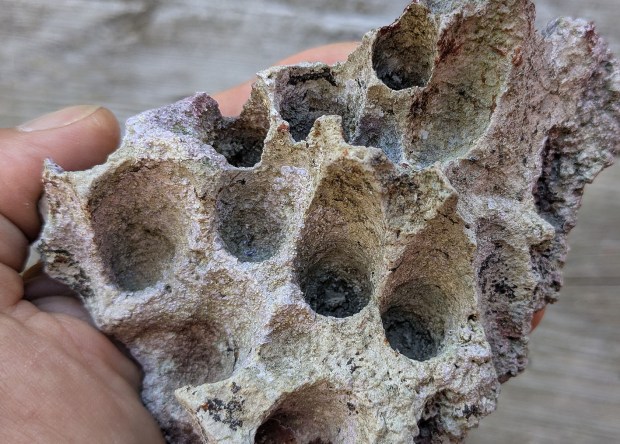
The region of Aust-Agder in Southern Norway hosts a range of Iron Age soapstone vessel quarries. One of them, the Sparsås quarry in Froland, is exceptionally well-preserved and one of the most “classic” quarries I have ever visited in Norway. With unfinished vessel blanks still attached to the quarry faces and a highly organised layout of the spoil heaps, it once must have been worked in an efficient way, providing vessels and other items for regional use and, quite probably, for export to Denmark and beyond. Here’s an account of the research history, geology and layout of the quarry. A hypothesis is also offered: This was a short-lived quarry, operated for a generation or so within the 9th or 10th century CE. Continue reading
Posted in Archaeology, Norway, Old quarries | Tagged , , , , , , , | Leave a comment

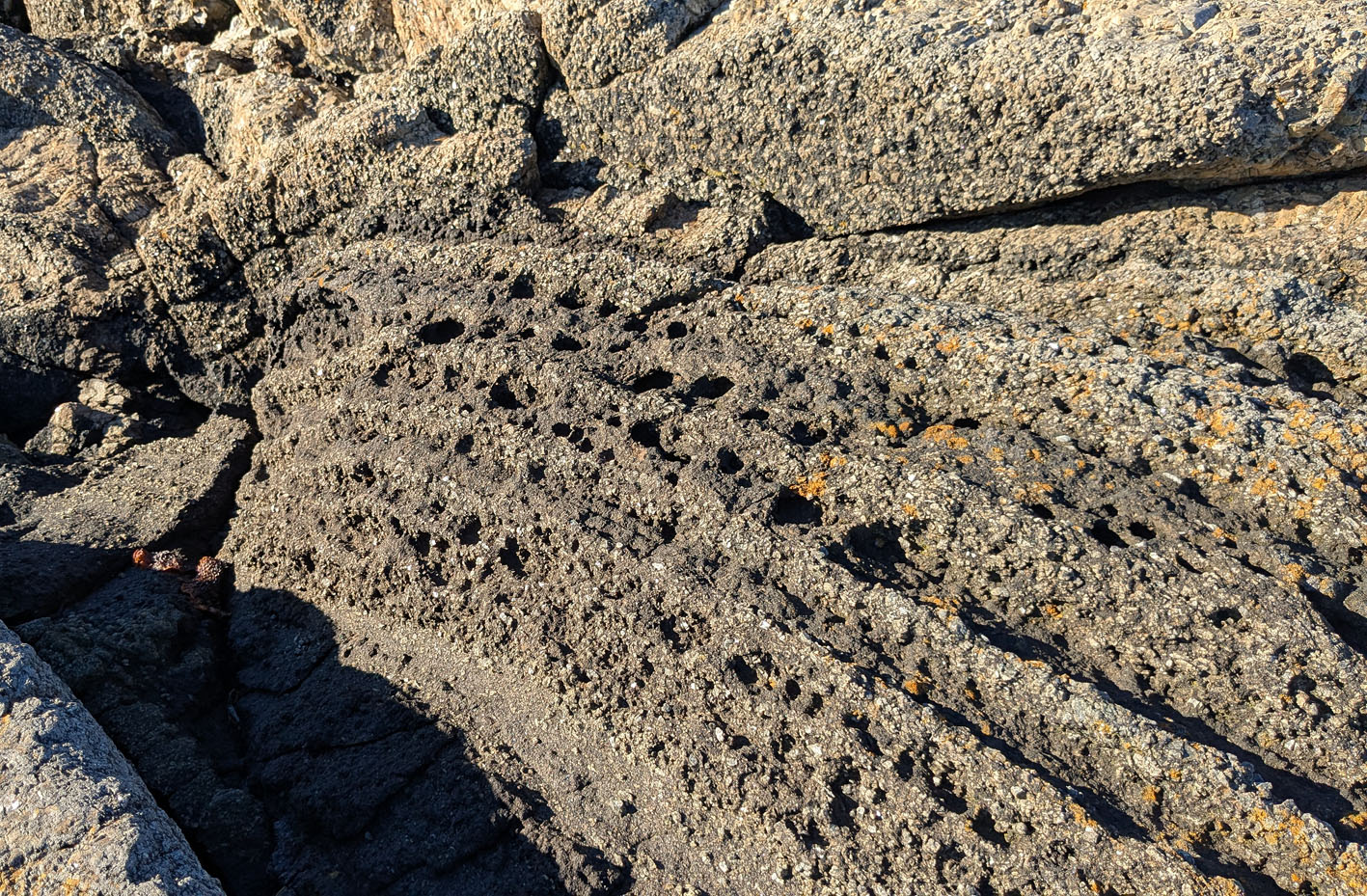
Tafoni-forvitring i larvikitt på Rakke ved Stavern

Tafoni på Rakke - knyttet til mørkere lag i larvikitt. Foto: PS

Tafoni på Rakke – knyttet til mørkere lag i larvikitt. Foto: PS

Tidligere i høst prøvde jeg å finne tafoni i larvikitt på svabergene ved Rakke utenfor Stavern. Så vidt jeg vet, er ikke tafoni noe vanlig fenomen i den grove larvikitten, men så var jeg heldig og kom over et lite felt rett i vannkanten ut mot havet, der larvikitten er bygd opp med nokså tydelig, magmatisk lagdeling. I de litt mer finkornede lagene med mørkere mineraler trådte tafonien frem, som rekker med større og mindre hull. Continue reading

Posted in Geomorphology, Norway, tafoni | Tagged , , , , , , , | Leave a comment

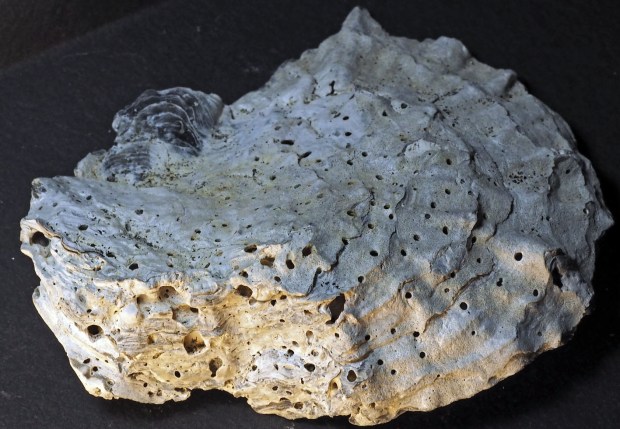
Bioerosion of shells on the beach – and in old Norwegian lime mortars

Heavily bored European flat oyster shell from a shallow bay at Flosta, South Norway (c. 9 cm long). Photo by PS

Heavily bioeroded/bored European flat oyster shell from a shallow bay at Flosta, South Norway (c. 9 cm long). Photo by PS

Looking closely at shells on the beach, you will find that most have smaller and larger holes, tunnels and “galleries” made by boring organisms. This is bioerosion, a powerful part of the process that makes shells break down and eventually become part of a shell sand deposit. Along the coast of Norway, such deposits were sometimes dug for aggregate to make lime mortars for building medieval churches. And bioerosion of shell fragments in the mortars can still be seen under the microscope. It may aid the understanding of how the mortars were made. Continue reading

Posted in Archaeology, lime burning, Marble, Weathering history | Tagged , , , , , , , , | 1 Comment

Madam Jørgensens 230 år gamle feltspatgruve i Narestø

Narestø gamle feltspatgruve sett mot sør, mot sjøen. Foto: PS

Narestø gamle feltspatgruve sett mot sør, mot sjøen. Foto: PS

Det var en kvinne som startet utvinning av kvarts og feltspat i Norge. Omkring 1790 rodde madam Jørgensen langs Sørlandskysten for å finne feltspat hun hadde planer om å selge som råstoff til kongens porselensfabrikk i København. Ved Narestø på Flosta fant hun det hun lette etter. Det ble starten på et mineraleventyr. Jeg skrev om eventyret for 10 år siden. I dag fikk jeg endelig ta Norges eldste feltspatgruve i øyesyn. En velbevart gruve som var i drift helt til 1920-tallet. Continue reading

Posted in Archaeology, Norway, Old mines | Tagged , , , , , , , | Leave a comment

Tafoni blant jettegrytene på Kvaknes (Kilsund)

Stor jettegryte med litt tafoni i forkant på Kvaknes. Foto: PS

Stor jettegryte på Kvaknes – med litt tafoni i forkant. Foto: PS

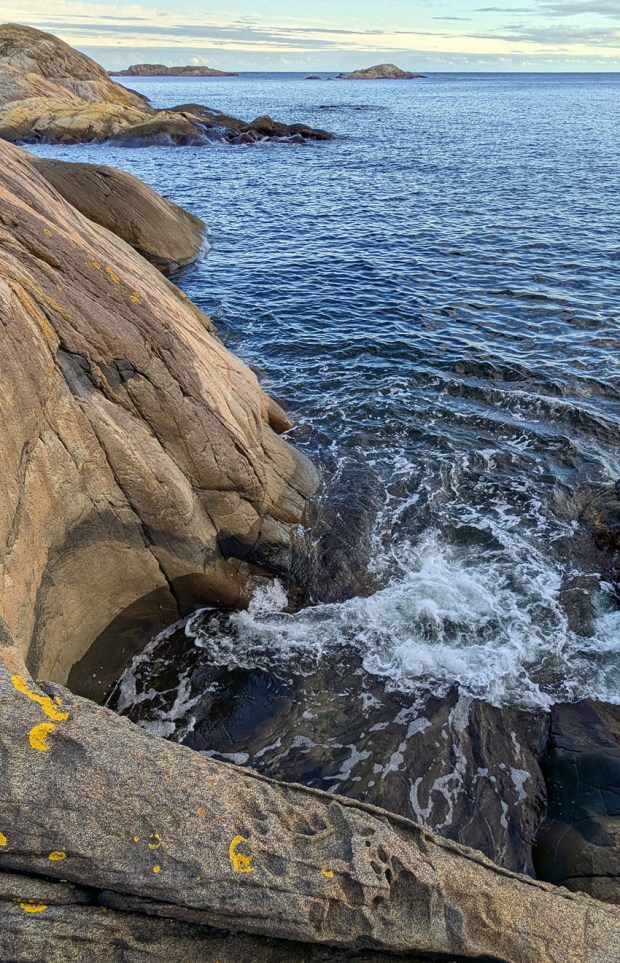
Kvaknes ved Kilsund på Tverdalsøy i Arendal kommune er kjent for sine mange jettegryter. Siden dette er en odde helt ut mot Skagerrak, burde det potensielt være et bra sted for tafoni-forvitring. Mye tafoni er det imidlertid ikke her, men det lille som finnes er eksemplarisk fordelt på de “svakere” bergartene – på mørk amfibolitt og i skifrige soner. Slik fordeling er klassisk for tafoni-forekomstene på Sørlandskysten. Continue reading

Posted in Geomorphology, Norway, tafoni, Weathering history | Tagged , , , , , , , , , , , , , , , , , , | Leave a comment

Impressions of limestone bioerosion on the Croatian island of Mljet

Borings in limestone fragment from Mljet, made by bivalves and likely broken from the littoral zone. Photo by Per Storemyr

Borings in limestone fragment from Mljet, made by bivalves and likely broken from the littoral zone. Photo by Per Storemyr

As the final destination of our family’s road trip through Europe this summer, the Croatian island of Mljet offered a beginner’s crash course on bioerosion of limestone. My experience in weathering has mostly been connected to abiotic phenomena such as salt and frost weathering, so it was fascinating to observe the bizarre forms made by living organisms, especially in the littoral zone of the rocky coast. Particularly interesting is the boring into the limestone by bivalves, limpets, barnacles and several other organisms. Continue reading

Posted in Geomorphology | Tagged , , , , , , , , , | 6 Comments

Small-scale lime burning for conservation in South Norway

Burning lime through the night

Burning lime through the night

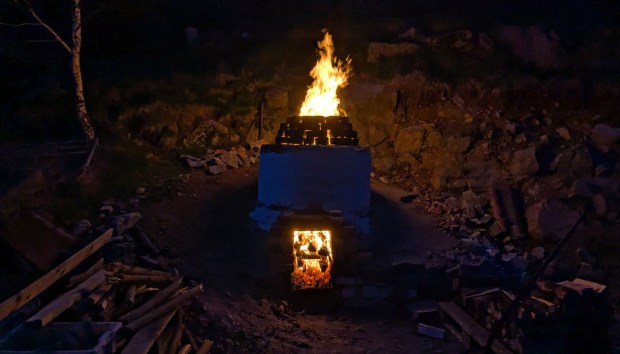
Over the past 10 years small-scale lime burning has become a new tradition in Norway. Aimed at repair and conservation of old buildings, especially churches, lime is now burnt at 7-8 places across the country: in Mid-Norway, on the west coast and in the Hamar region in the southeast. In Tvedestrand, on the south coast, we began burning in a half-ton kiln two years ago. Here are impressions from our 8th burn this spring. Continue reading

Posted in lime burning, Marble, Monument conservation, Norway | Tagged , , , , , , , , , , , , , , , , , | 1 Comment

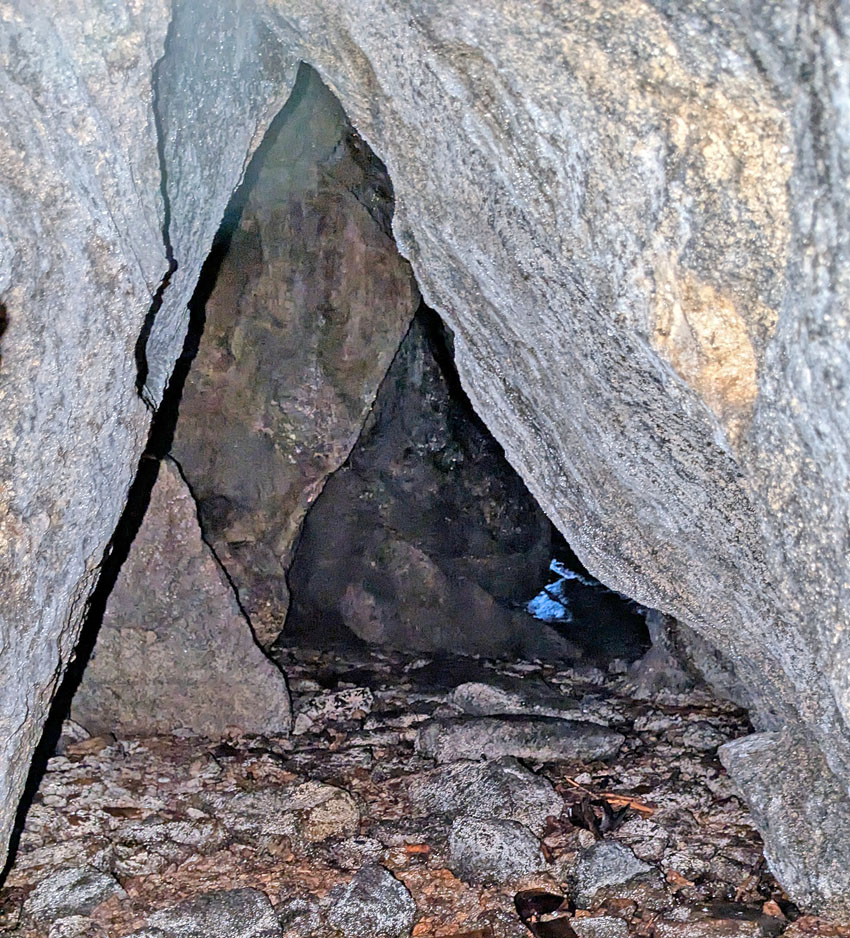
Tafoni-forvitring i skogsterreng på Flosta

Tafoni i taket til en heller på Flosta. Foto: PS

Tafoni i taket til en heller på Flosta. Foto: PS

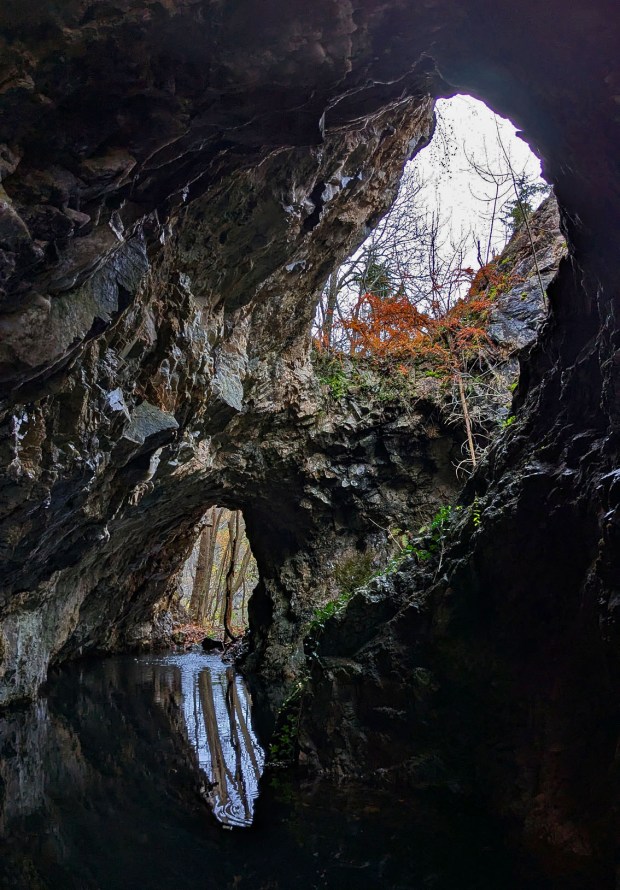
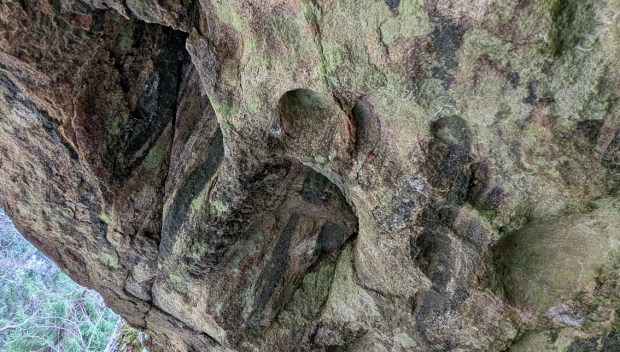
Grotter og hellere dannet av brenninger og bølgeslag er ikke et vanlig syn på Sørlandet. Men under en vandring i vårskogen på Flosta kom jeg forleden over en lav heller, ganske sikkert dannet av brenninger da havet sto 20-30 m høyere enn i dag. Det fine med helleren er at den er full av tafoni i taket. Og også i omgivelsene er det mengder med tafoni – alt i en 600 m lang og nesten 30 m høy brattkant med metagabbro og migmatitt, og alt 25-30 m over havet. Hvorfor finner vi tafoni akkurat her, langt inne i skogen? Continue reading

Posted in tafoni, Weathering history | Tagged , , , , , , , , , , , , , , , | 2 Comments

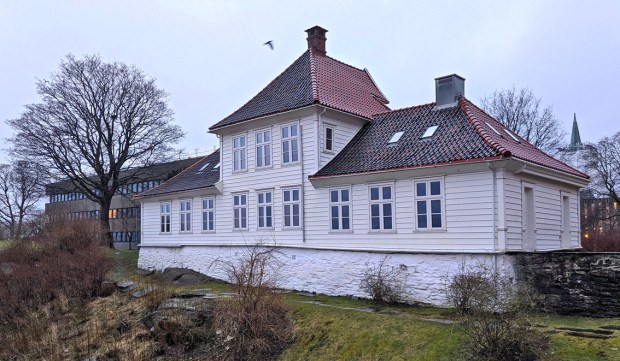
Grunnmuren til Fastings Minde i Bergen: Etter 5 år står tradisjonskalken fortsatt godt!

Fastings Minde med den store grunnmuren som ble restaurert i 2020. Foto: Per Storemyr, mars 2025.

Fastings Minde med den store grunnmuren som ble restaurert i 2020. Foto: Per Storemyr, mars 2025.

Den store grunnmuren til 1700-tallsbygningen Fastings Minde i Bergen ble i 2020 restaurert med tradisjonskalk. Arbeidet ble gjort under et større kurs i bruk av “hjemmebrent” kalk fra ovnene i Hyllestad. I dag, 5 år etter, står den værutsatte muren fortsatt nesten som om den skulle vært restaurert i går. Det er godt nytt for alle som er interesserte i kortreist tradisjonskalk og bruk av hotmix til restaurering. Continue reading

Posted in lime burning, Marble, Monument conservation, Norway | Tagged , , , , , , , , , , , , , , , , | 2 Comments

The Grotesque World of Tafoni Weathering on the South Coast of Norway

The Grotesque World of Tafoni Weathering on the South Coast of Norway. Photos: Per Storemyr

Like grotesque gargoyles on a medieval cathedral… On studying tafoni weathering on the south coast of Norway, a bizarre world is revealed. There are dragons, mythical beasts, grotesque masks – and Jabba the Hutt from Star Wars. Can you find him? Continue reading

Posted in Norway, tafoni, Weathering history | Tagged , , , , , , , , , , , , , | 3 Comments