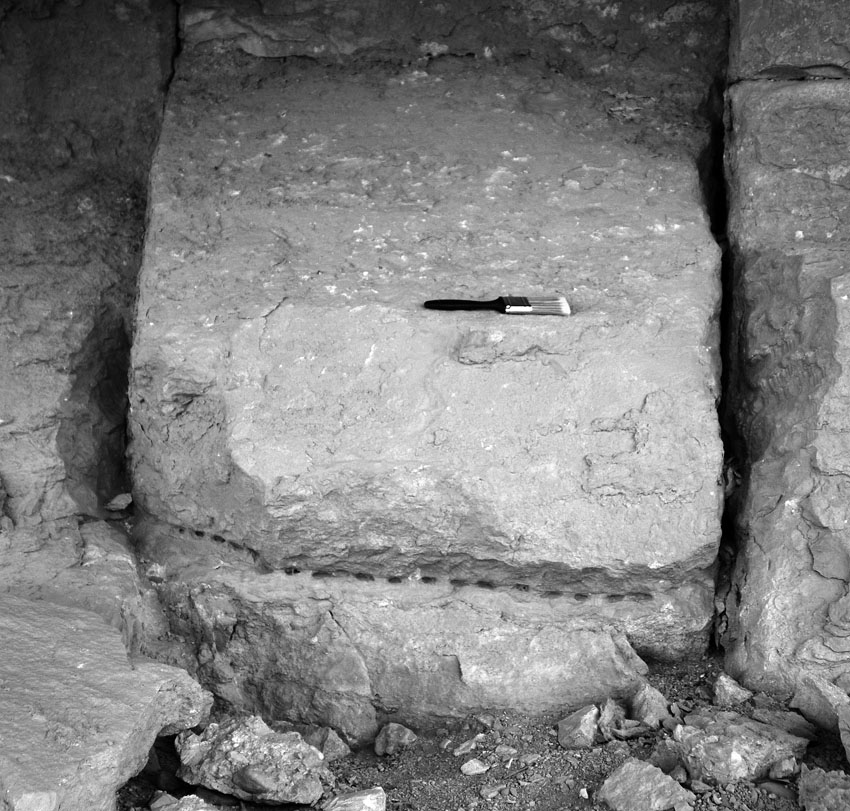
Partially extracted block in the 18th Dynasty part of the Qurna limestone quarry at Thebes. Note the line of chisel holes along the block’s base and the narrow trenches along its sides that must have been cut with a long chisel. A natural fracture separates the block’s back side from the bedrock. Brush is 21 cm long. Photo by JAMES HARRELL.
Partially extracted block in the 18th Dynasty part of the Qurna limestone quarry at Thebes. Note the line of chisel holes along the block’s base and the narrow trenches along its sides that must have been cut with a long chisel. A natural fracture separates the block’s back side from the bedrock. Brush is 21 cm long. Photo by JAMES HARRELL.
Discover more from Per Storemyr Geoarchaeology & Conservation
Subscribe to get the latest posts sent to your email.
 Per Storemyr Geoarchaeology & Conservation
