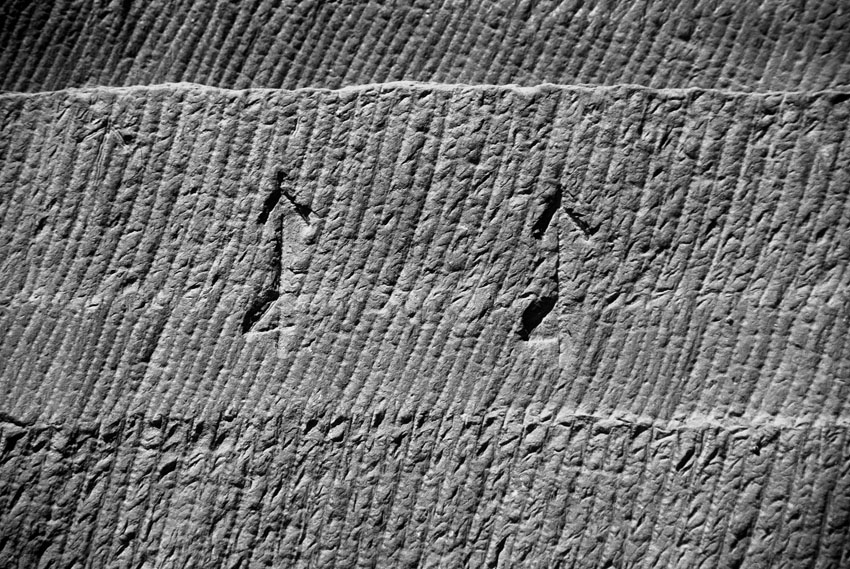
Segmented chisel tracks in the Ptolemaic part of the Gebel el-Silsila sandstone quarry. The two large ‘quarry marks’ at center (resembling a harpoon or arrow combined with the numeral four) and another smaller, fainter one at upper left (a harpoon only) symbolized the god Horus but may also have had some meaning related to the quarrying process (NILSSON forthcoming). Photo by JAMES HARRELL.
Segmented chisel tracks in the Ptolemaic part of the Gebel el-Silsila sandstone quarry. The two large ‘quarry marks’ at center (resembling a harpoon or arrow combined with the numeral four) and another smaller, fainter one at upper left (a harpoon only) symbolized the god Horus but may also have had some meaning related to the quarrying process (NILSSON forthcoming). Photo by JAMES HARRELL.
Discover more from Per Storemyr Geoarchaeology & Conservation
Subscribe to get the latest posts sent to your email.
 Per Storemyr Geoarchaeology & Conservation
What do you mean “segmented chisel marks”? Surely it’s obvious these patterns indicate machine excavation.
No, these are marks of manual work.