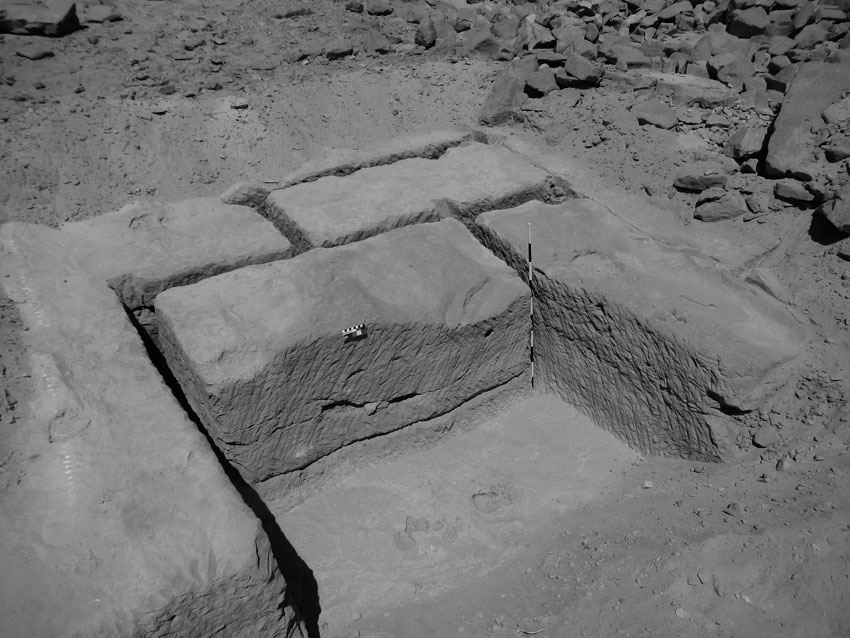
Partially extracted blocks in the Ramesside (19th-20th Dynasties) part of the Gebel el-Silsila sandstone quarry. Note the two parallel grooves at the back of the leftmost trench. Smallest scale divisions are 1 cm at center and 10 cm at right. Photo by JOHN WARD.
Partially extracted blocks in the Ramesside (19th-20th Dynasties) part of the Gebel el-Silsila sandstone quarry. Note the two parallel grooves at the back of the leftmost trench. Smallest scale divisions are 1 cm at center and 10 cm at right. Photo by JOHN WARD.
Discover more from Per Storemyr Geoarchaeology & Conservation
Subscribe to get the latest posts sent to your email.
 Per Storemyr Geoarchaeology & Conservation
