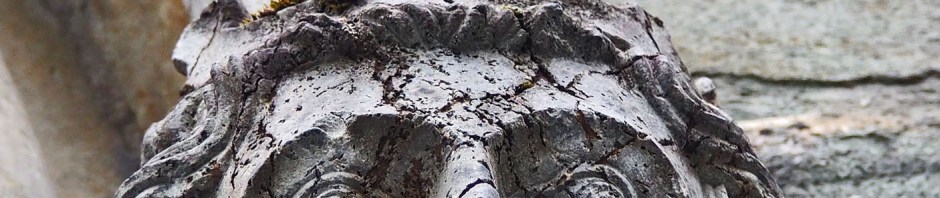
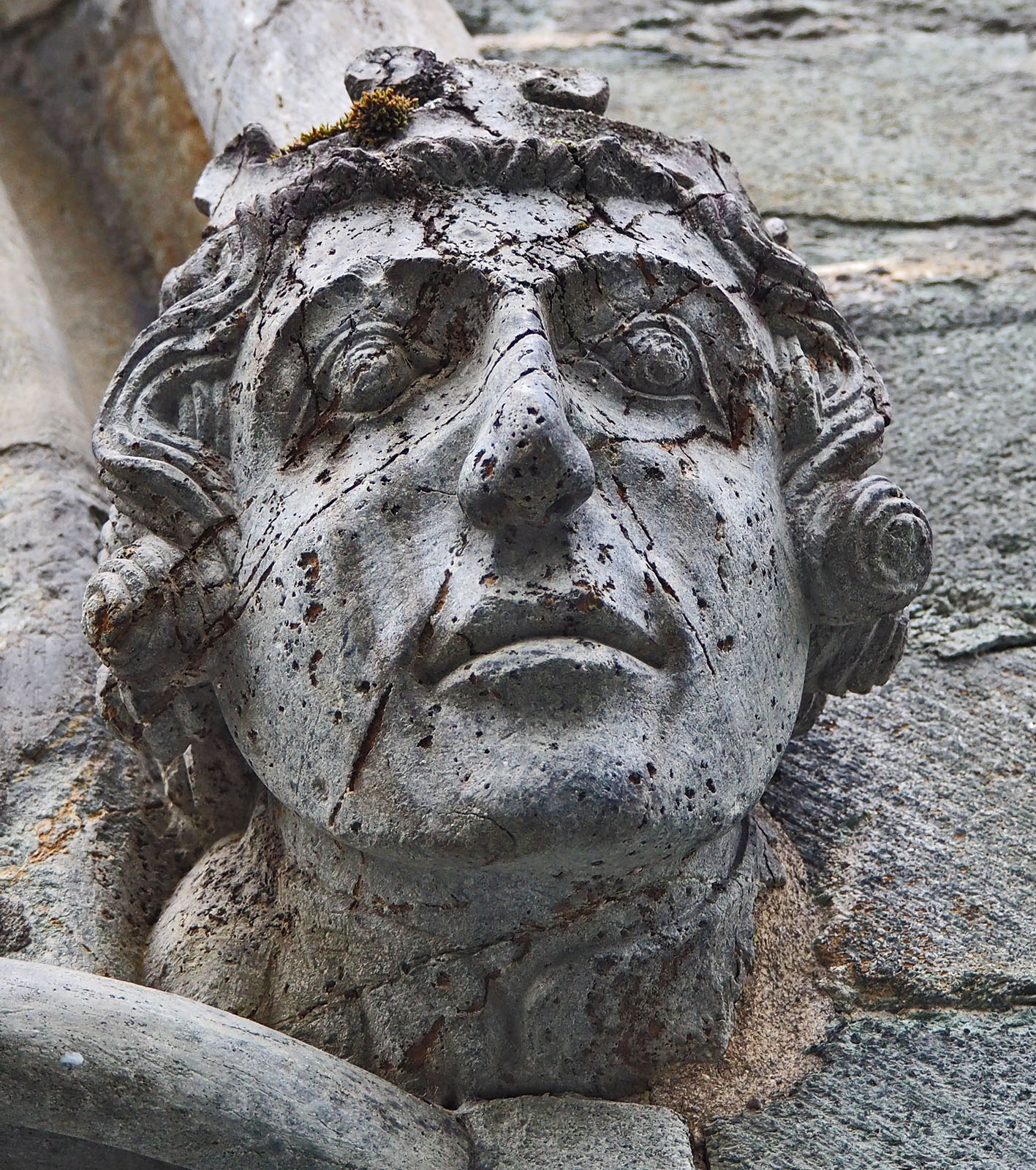
Well-preserved Gothic sculpture of a king at Nidaros Cathedral. Photo by PS
Over the last couple of years, I have had the pleasure of investigating medieval stonework and sculpture for Nidaros Cathedral Restoration Workshop – more than 35 years after I first started to work with the cathedral. There is a lot of weathering of soft soapstone and greenschist going on, the major stone types of the cathedral. Hence the joy of encountering very well-preserved Gothic sculpture. Why are they still in such a good shape, 800 years after they were carved?
The sculptures that now came to fascinate me are life-size heads made in the 13th century, the construction heyday of the Gothic part of Nidaros Cathedral. They are of a bishop, a king and Moses with horns, and were carved for a partial reconstruction in Gothic style of St. Michael’s Chapel, above the 12th century Romanesque North Porch of the cathedral.
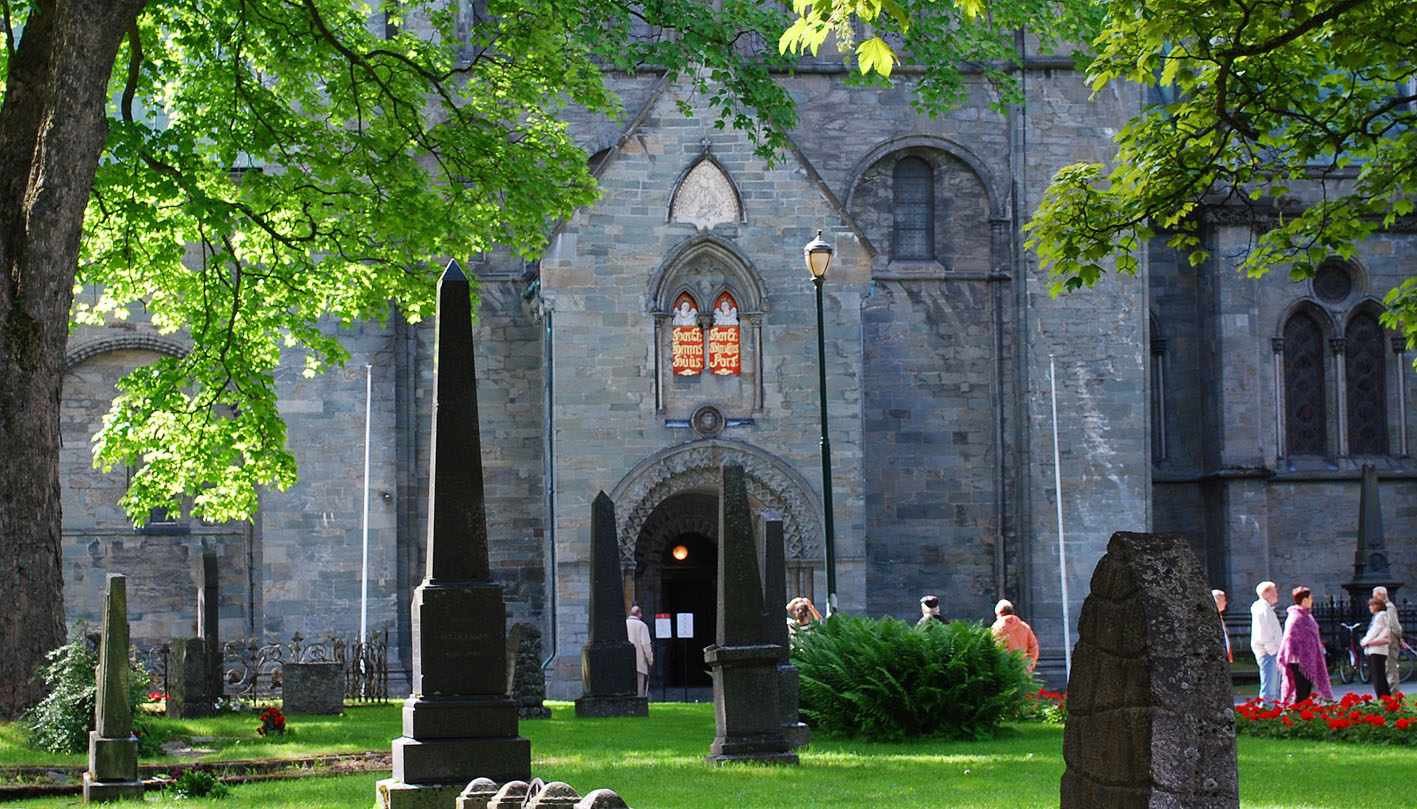
The Romanesque North Porch of Nidaros Cathedral, with St. Michael’s chapel above. The head sculptures are associated with the opening featuring a pointed, Gothic arch. Photo by PS
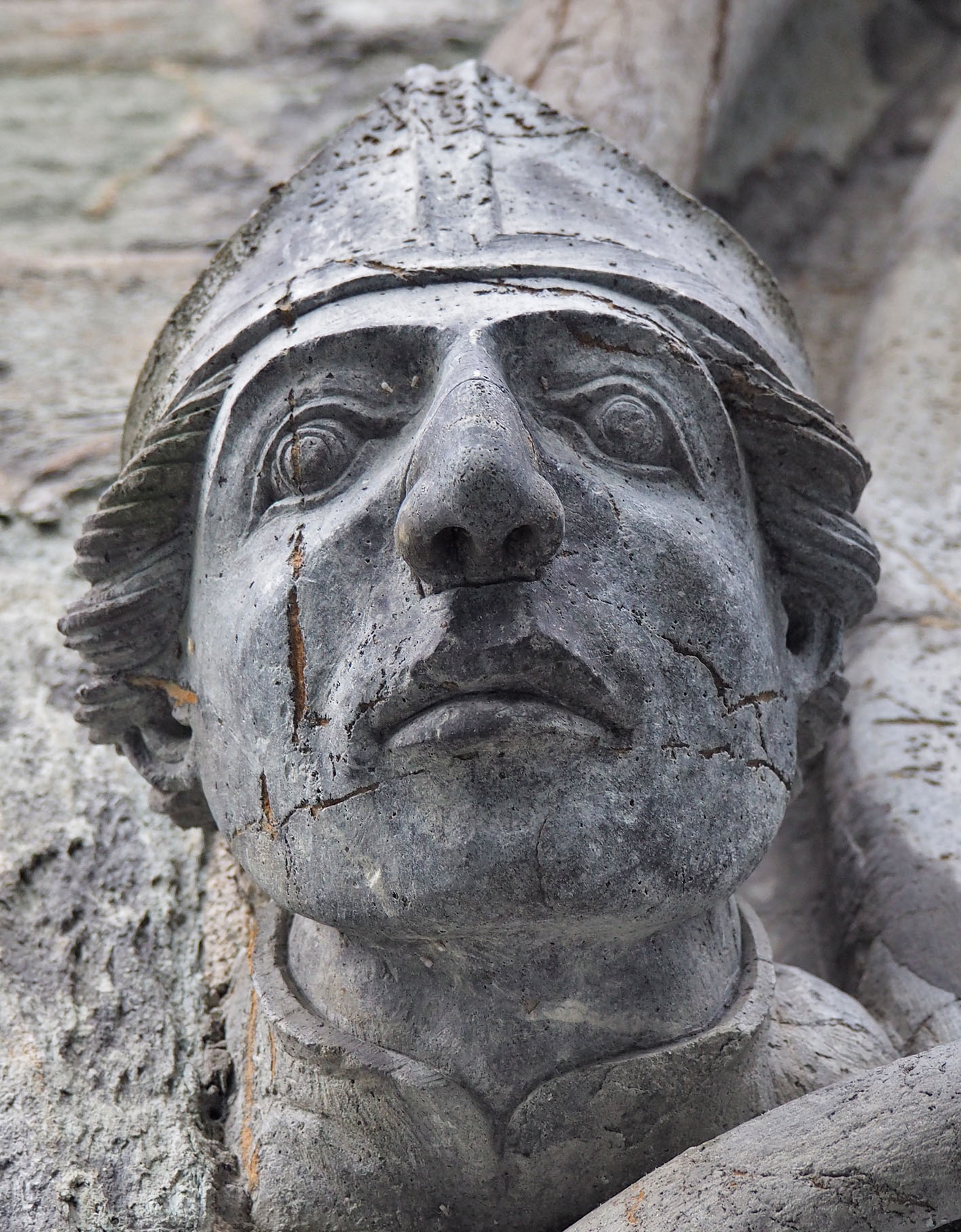
The well-preserved Gothic bishop. Photo by PS
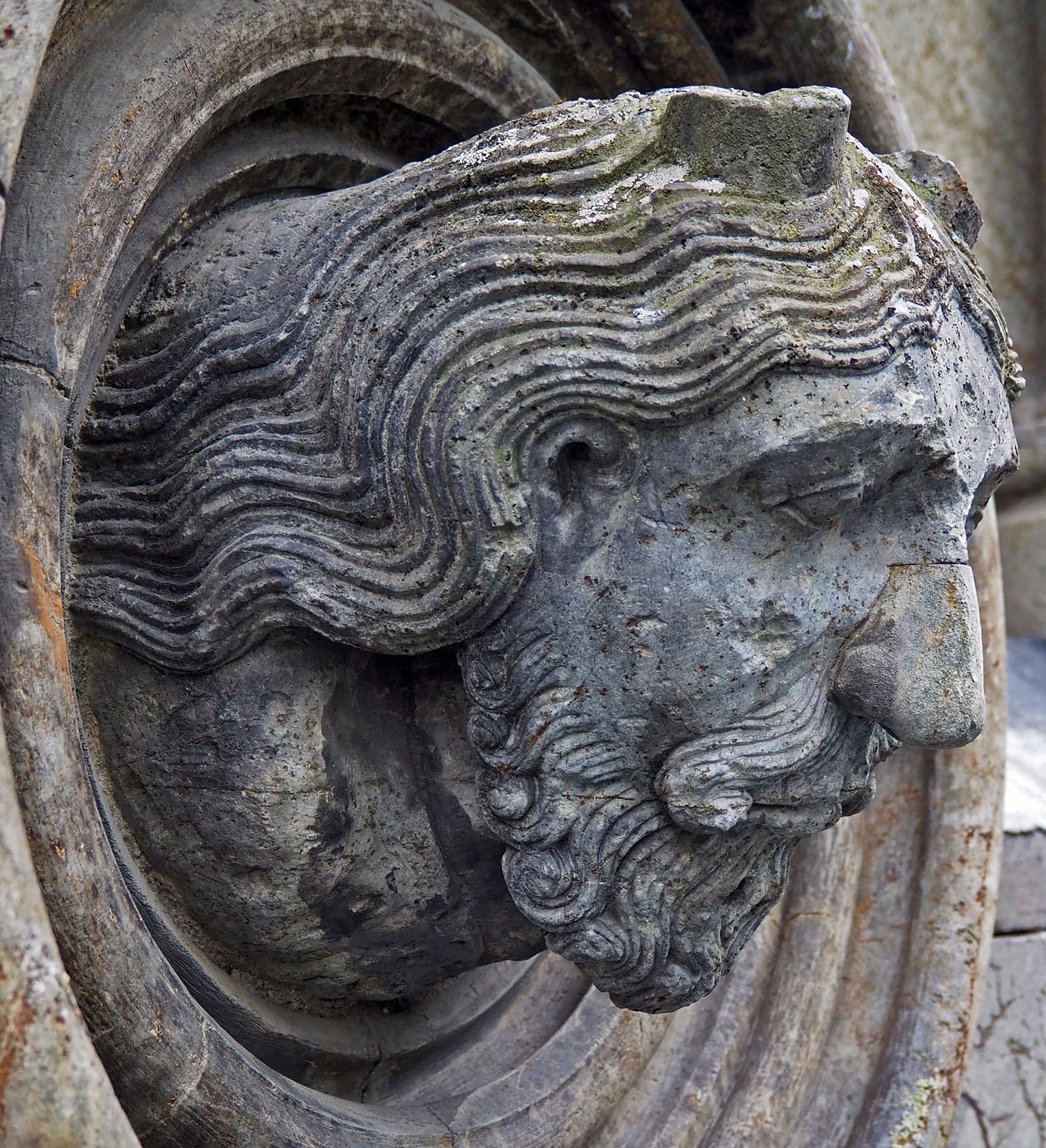
Moses with horns. Hair and beard in fabulous condition after nearly 800 years of exposure to the elements. Photo by PS
Except for the bishop and Moses having lost their noses, which were reconstructed in 1880, there are very few damages. Obviously, this indicates that the quality of the dense and soft soapstone is good, just like within smaller spots of the local, medieval soapstone quarries. However, at large these quarries often have cracks and cleavage. This implies that it was difficult for the medieval craftsmen to obtain larger pieces from the quarries.
On studying the quarries, it is evident that within homogeneous spots, the stone weathers very little when directly exposed to rain and snow. However, small carbonate veins cutting through the soapstone matrix tend to slightly dissolve over the years. Dissolution is a natural phenomenon in carbonates and is also seen on the sculptures.
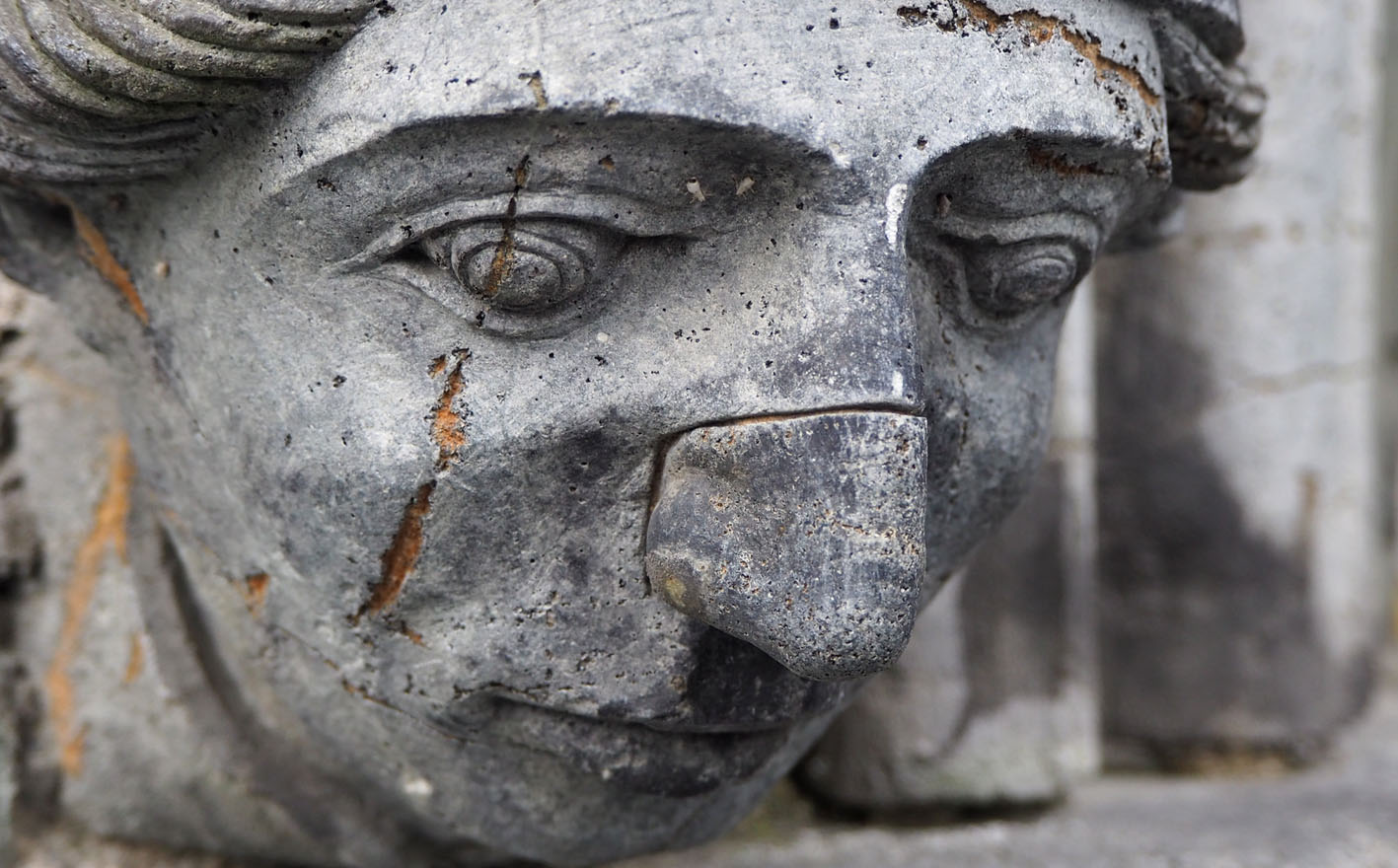
The bishop’s scar across the eye: A carbonate vein, probably dolomite, that has been slightly dissolved. The brown colour is simply rust from small quantities of iron in the dolomite. Photo by PS
Behaving well when thoroughly washed by rain, the opposite tends to occur in sheltered positions in the quarries. These are places where salt can accumulate, derived mainly from dissolution of a small content of iron sulphides in the rock. The result is formation of gypsum, which leads to flaking and disintegration of the fabric when crystallisation takes place just below the stone surface.
In fact, the king sculpture is an excellent example of this phenomenon. For just behind the protruding, rain-washed head and in the same piece of stone is carved the mouldings of the Gothic window arch to which the head belongs. This part is effectively protected from most rain showers and is an ideal place for accumulation of gypsum. In this case most of the gypsum comes from former air pollution, and the result is disintegration of the stone surface.
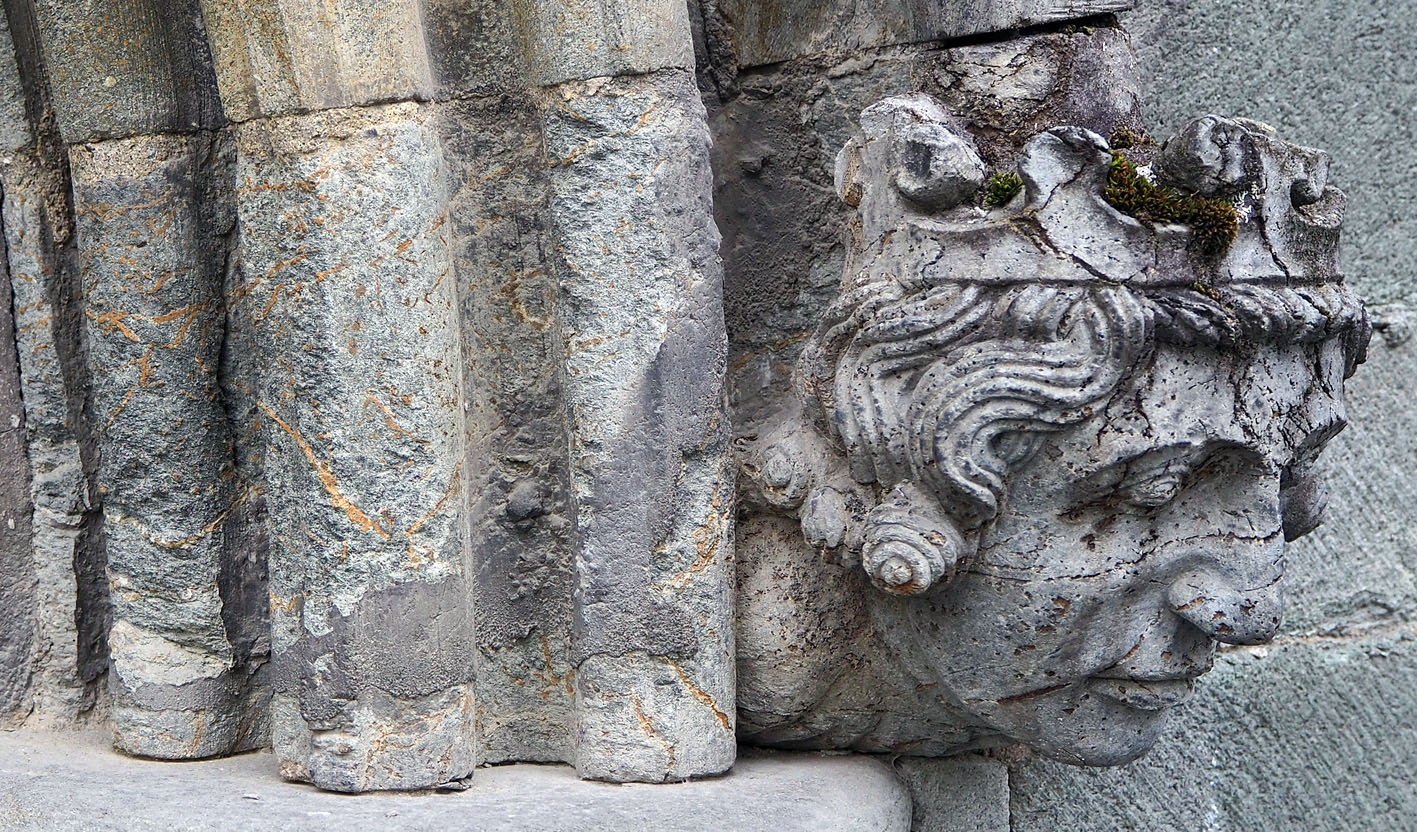
The Janus-faced stone of the king: Excellently preserved, protruding head regularly washed by rain, and retracted mouldings protected from rain – in the same stone piece: Here, salt and black gypsum crusts have accumulated, leading to weathering. Photo by PS
Similar phenomena can be observed at many places on Nidaros Cathedral, as well as on old stone architecture across the world. There are thousands of local variations, many sources of different salts and many stones may not behave well when strongly exposed to precipitation (and frost). Some stones may even resist salt weathering. But the general picture is weathering at places where salt can accumulate.
Such a joy to be able to admire fine stone carving – and weathering – on the Janus-faced soapstone heads at Nidaros Cathedral!
*
Read more about stones and weathering of Nidaros Cathedral:
- Storemyr, P. (2015): Nidarosdomens grunnfjell. En reise i steinbryternes fotspor fra Det gamle Egypt til Europas nordligste katedral. Nidaros Domkirkes Restaureringsarbeiders Forlag, Trondheim, 412 p. [The quarries of Nidaros: A journey in stone from Ancient Egypt to Europe’s northernmost medieval cathedral
- Storemyr, P. (1997): The Stones of Nidaros. An Applied Weathering Study of Europe’s Northernmost Medieval Cathedral. Ph.d-thesis, no. 1997:92, Norwegian University of Science and Technology, Trondheim, 374 p.
Discover more from Per Storemyr Geoarchaeology & Conservation
Subscribe to get the latest posts sent to your email.







 Per Storemyr Geoarchaeology & Conservation
See my reply on dealing with this cathedral’s sculptural and architectural carvings.
Knapperjack
Thanks. Weathering history of cathedrals is complex, I have worked with it for the better part of my professional life. A great inspiration for this work is weathering history of ancient Egyptian monuments, for example the Cleopatra obelisks. The New York obelisk is particularly illustrating. Everyone blamed air pollution, but was it really like that? See https://per-storemyr.net/2010/12/12/cleopatra%e2%80%99s-needle-tracing-obelisk-weathering-with-old-photos/. All best, Per
Per,
Thanks for the continuing education on how the world of geology works and 0f human events and activities that interact.
The cathedral examples of the sculptural and architectural differential weathering in steatite and greenschist show that, like Michelangelo, more ancient craftsman perceived the benefits of grade selection when selecting raw materials.
Reading your post, I was reminded of a situation at my alma mater, U. of P. wherein many of the 18th and 19th century buildings were constructed of greenschist, which became a problem in the 20th century (50’s & 60’s) because of so called “acid rain” which exacerbated chemical erosion. Great efforts and expense were made to ameliorate the problem. The situation still persists today.
Jack