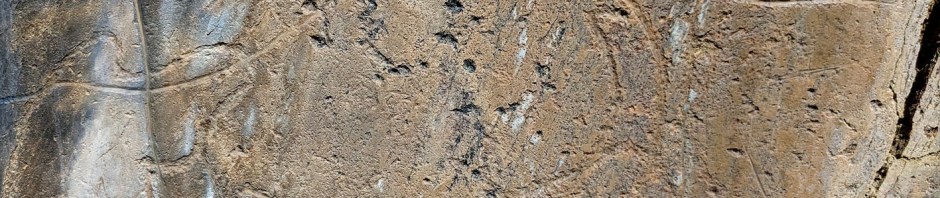

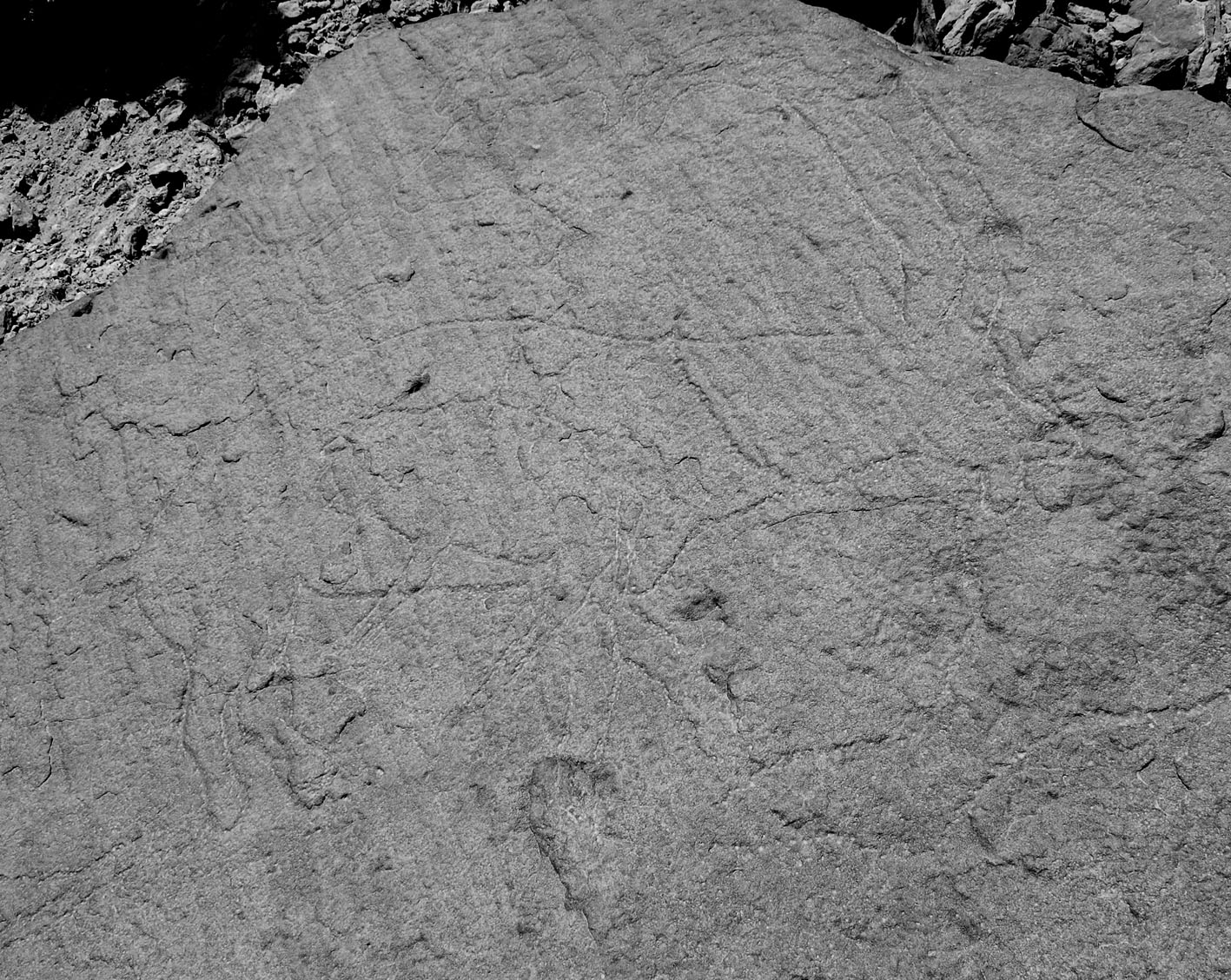
Superimposed aurochs on rock 3 at the Penascosa site in Côa. Photo by PS
On working with Late Palaeolithic rock art in Upper Egypt several years ago, sometimes we used to compare the naturalistic style of newly found petroglyphs with photos of those in the Côa Valley (NE Portugal). This was because the large Côa site has open air petroglyphs, whereas most other Late Palaeolithic rock art sites feature cave paintings. But I was never able to visit the Côa site to see for myself how the petroglyphs compare. Until now. On a road trip this summer we got a glimpse of the Côa images, at the Penascosa site. This brief article shows many similarities between the rock art in Côa and Upper Egypt, but also a harsh difference: Whereas Côa is a well-managed UNESCO World Heritage Site, the rock art in Egypt is under immense risk of destruction by modern mining.
Penascosa in Côa
The Côa site is large, with 80 subsites, some 1200 rock art panels and more than 10 000 individual images. Many feature Late Palaeolithic drawings, which is the theme in this article, but there is also rock art from subsequent periods almost up to our own time. The rock art was rediscovered on construction of a dam in the 1990s. Following huge protests on a nationwide and international scale, the construction was stopped and the area designated a UNESCO World Heritage site in 1998. The nearby Siega Verde rock art across the border to Spain was included within the site in 2008. The Côa Park, a museum and visitor centre, was established, excavations and research carried out, and today visitors can enjoy lengthy guided tours across the rolling hills to selected sites along the Côa River.
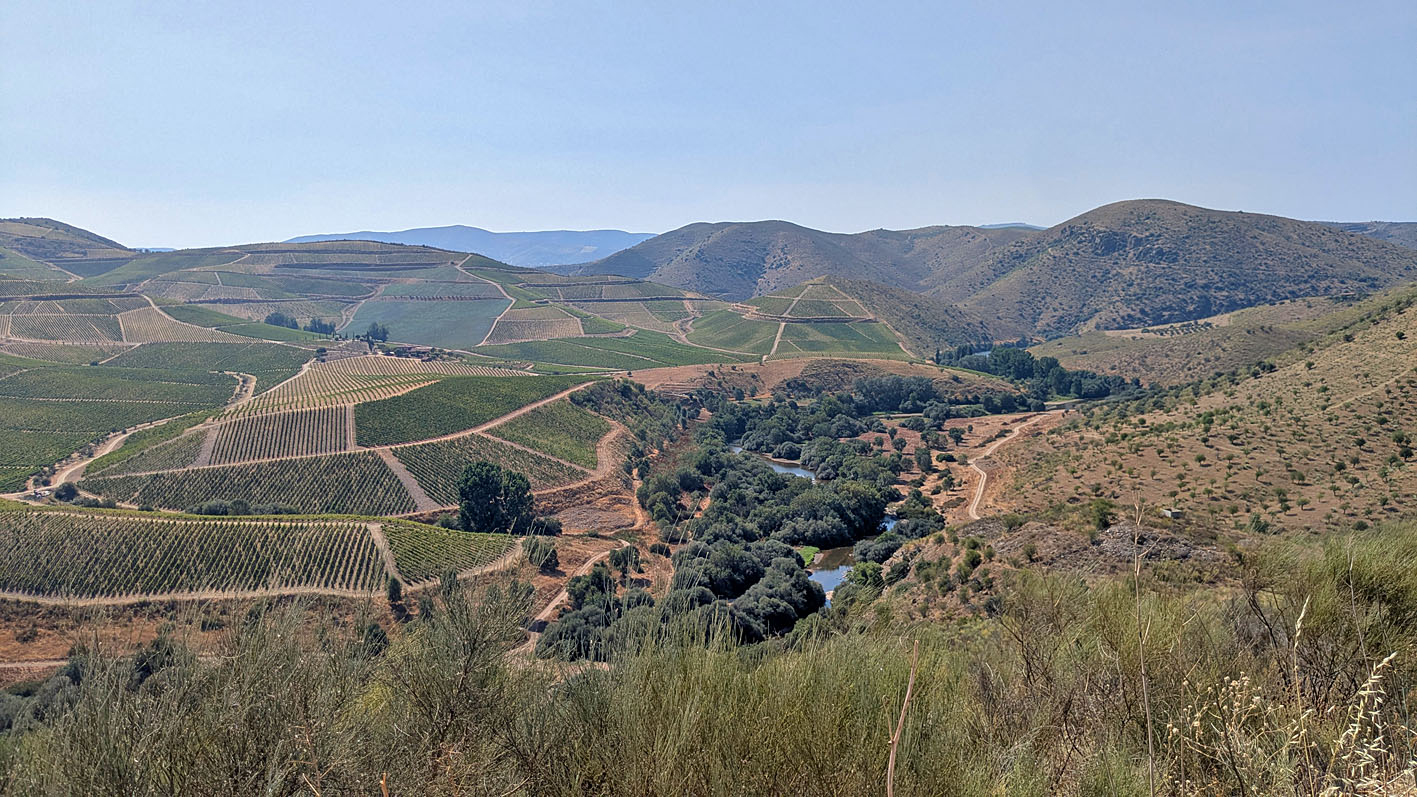
The Coa Valley. Photo by PS
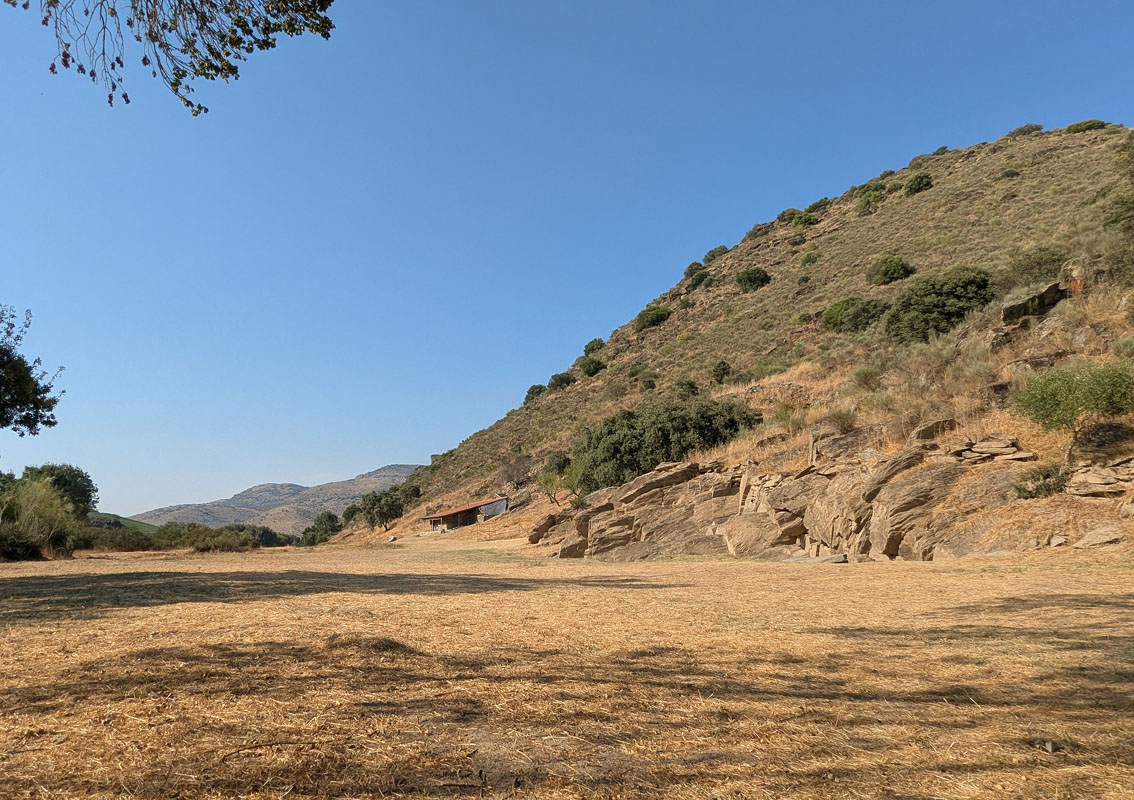
The Penascosa site. Photo by PS
Our tour was with Aldina Regalo of the Côa Park as a friendly guide. She took us to the Penascosa site by the Côa River, a few km upstream from where it meets the Douro River on its way to the Atlantic by Porto. At Penascosa the rock art is pecked and incised on smooth, near vertical fracture surfaces in metasedimentary outcrops of Cambrian greywacke and schists. We got to see some essential elements of the Côa rock art, made in a then cold and arid, but also highly variable climate succeeding the Last Glacial Maximum (LGM).
Rock 3 is particularly intriguing, consisting of more than 10 mainly aurochs (wild cattle) superimposed on one another in 5 different sequences. Superimposition is widespread in Côa; people often took advantage of previous panels instead of pecking/incising images on “fresh” rock just beside. Rock 3 also features what has been considered depiction of motion, with an auroch drawn as if “looking over its shoulder”. Rock 4 shows a similar depiction of supposed motion, with a horse rather crudely drawn with its head in 3 different positions (see Fernandes 2018).
Aurochs and horses are the main animals depicted, but goats with long horns, deer, fish and some other animals are not uncommon. Techniques include both pecking and incision, sometimes with pecked lines subsequently abraded or “polished” – perhaps long after the figures were made.
Dating is always difficult in rock art research, but combinations of indirect techniques (OSL, TL), stylistic evidence, occupation dynamics and geomorphological changes of the valley indicate that the figures were made in phases over several thousand years, from a little earlier than 20 000 BCE (Gravettian-Solutrean periods) and into the Magdalenian period (Aubry 2020). There has been massive controversy over the dating of the Côa rock art, but – despite a few still arguing for a Holocene date – it seems that there now is widespread agreement about the Palaeolithic age of the oldest petroglyphs.
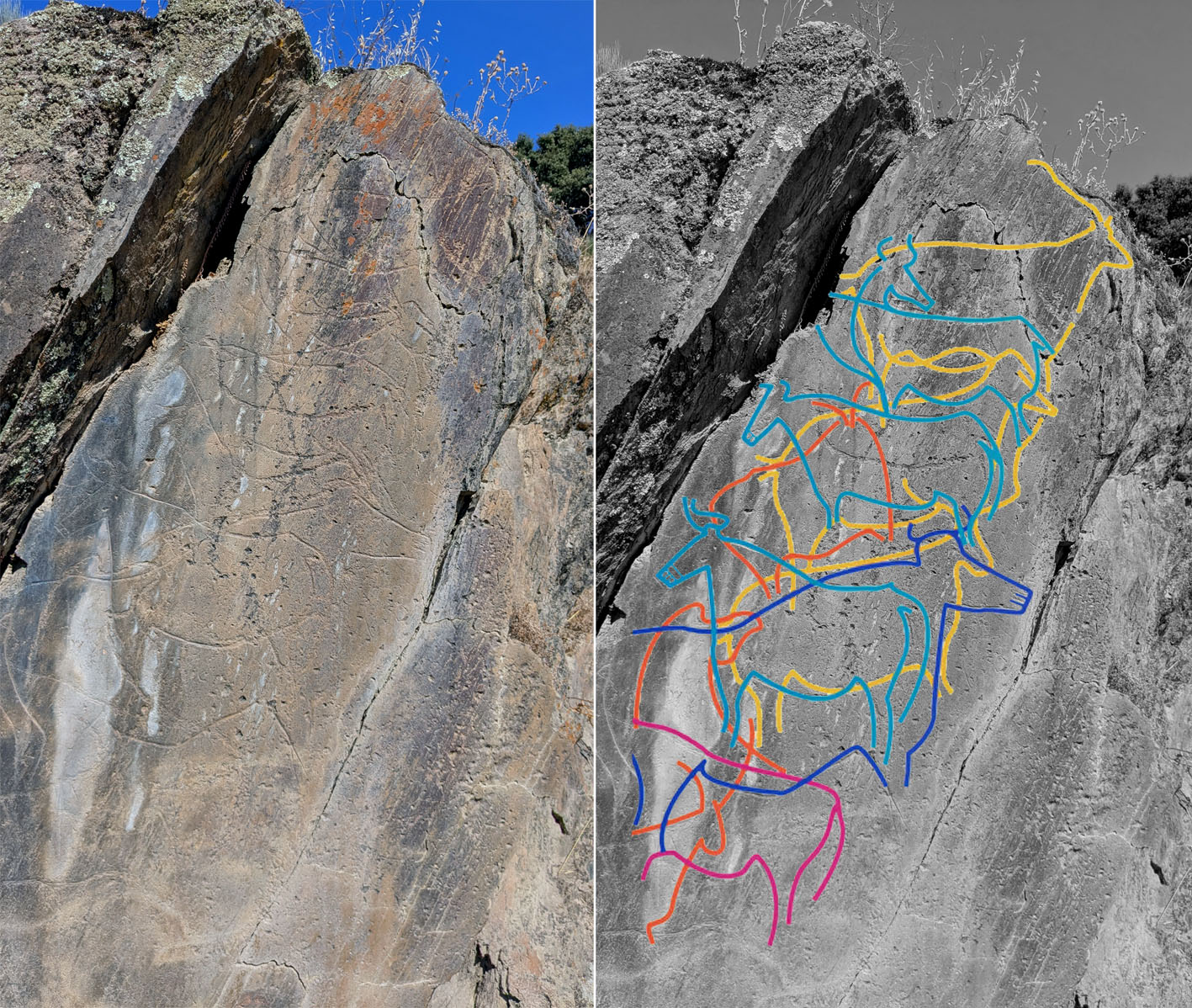
Rock 3 at Penascosa, with mainly aurochs superimposed on one another. From older to younger: Yellow, orange, red, dark blue, light blue. Photo by PS, tracing adapted from Fernandes 2018
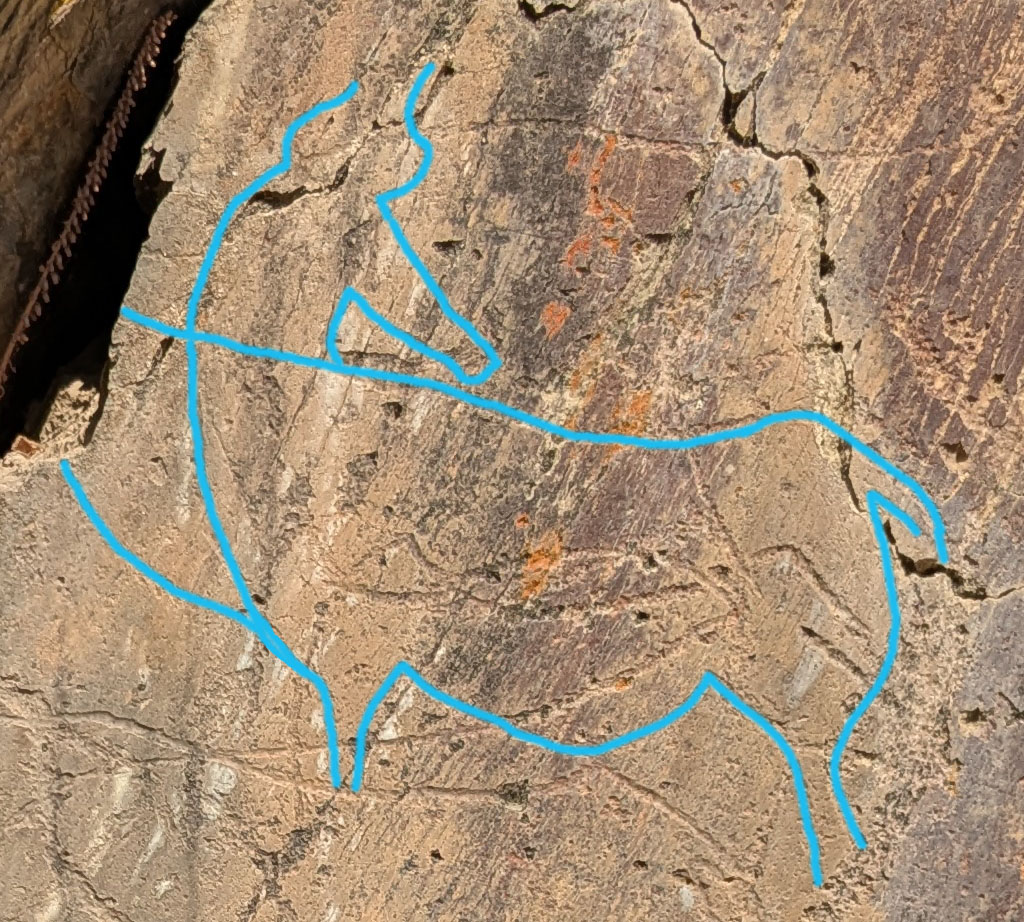
Rock 3 at Penascosa, with auroch “looking over its shoulder”. Photo by PS, tracing adapted from Fernandes 2018

Rock 3 at Penascosa. The head of an auroch, with lines possibly incised (“abraded”) over previous pecking(?). Photo by PS
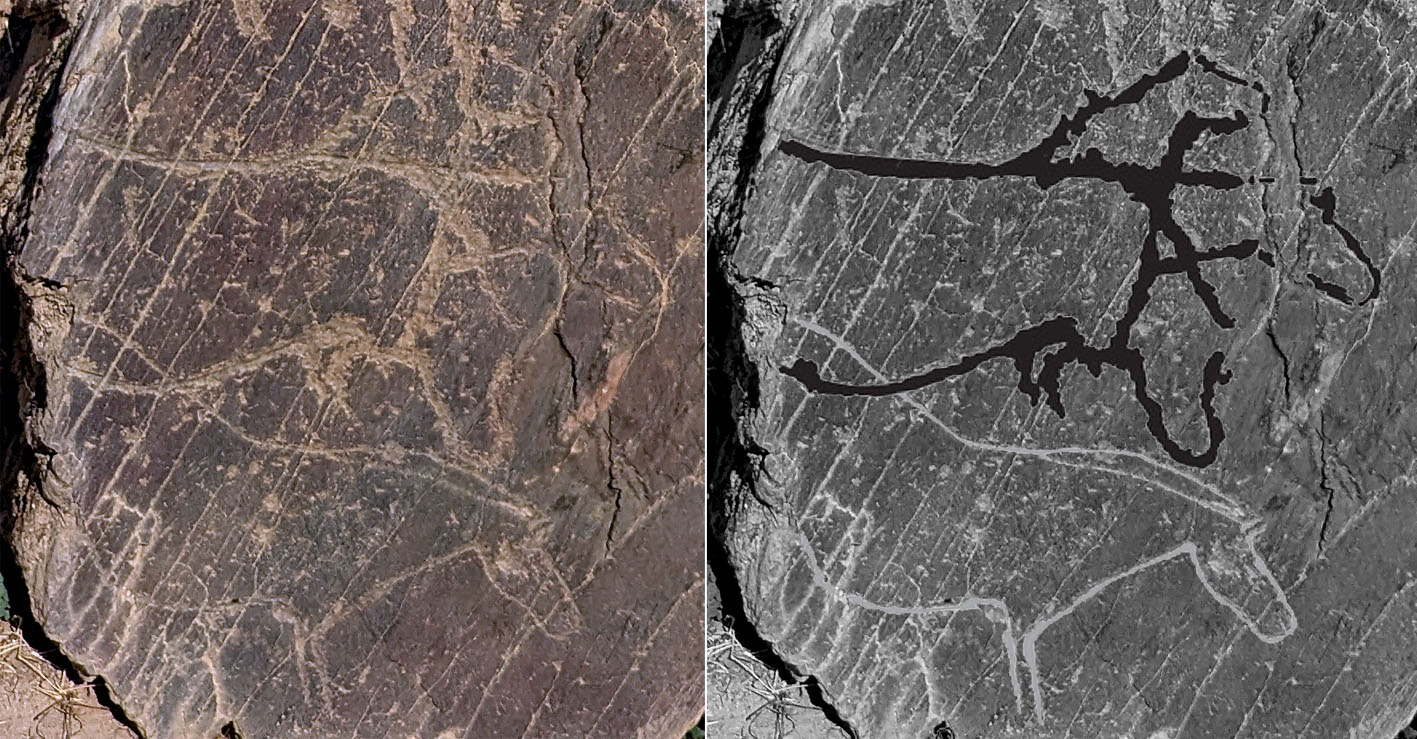
Rock 4 at Penascosa, with a horse’s head shown in 3 different positions. Photo by PS, tracing adapted from Fernandes 2018
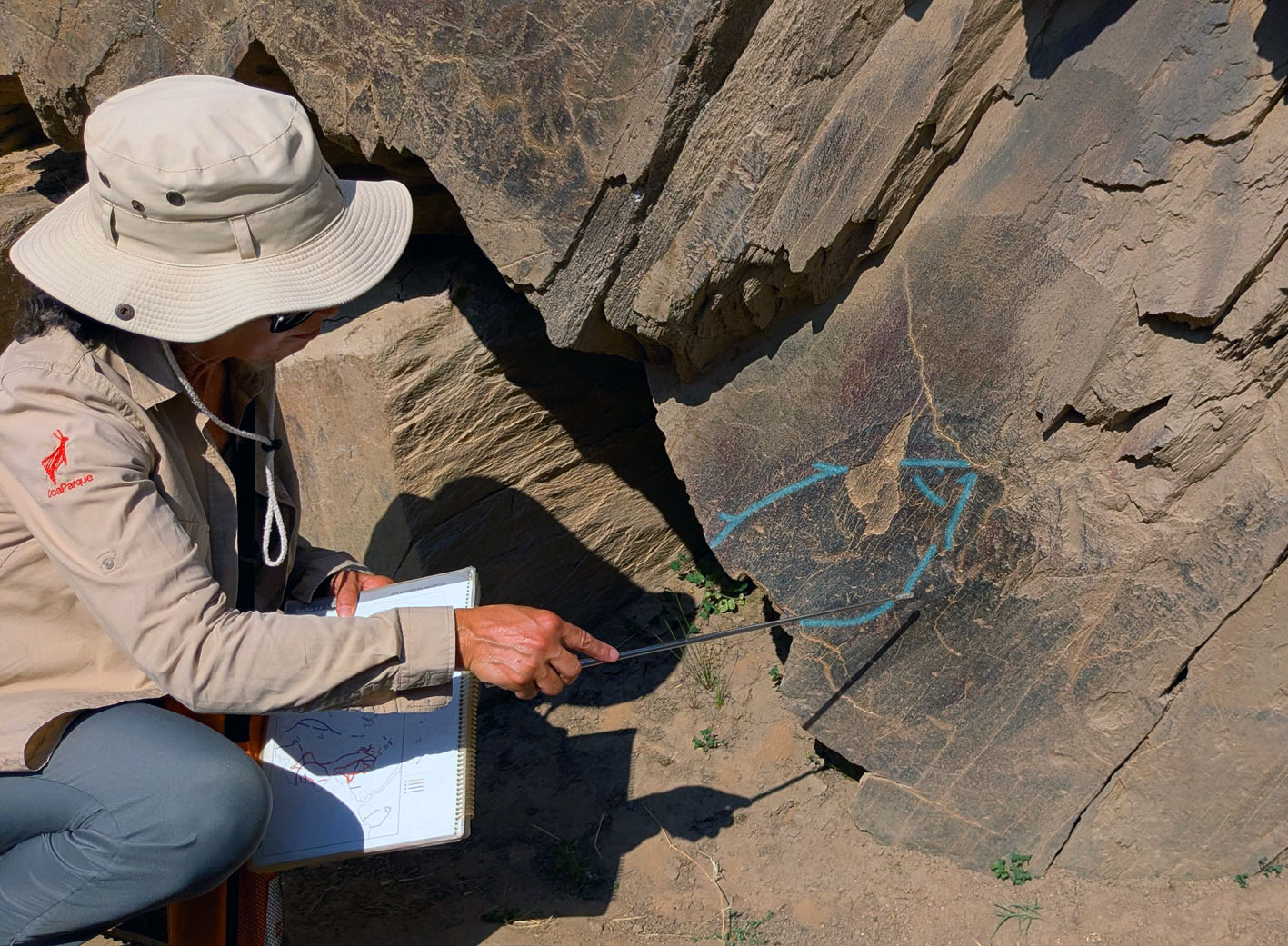
Aldina Regalo showing a fish image at Penascosa (highlighted with blue colour). Photo by PS
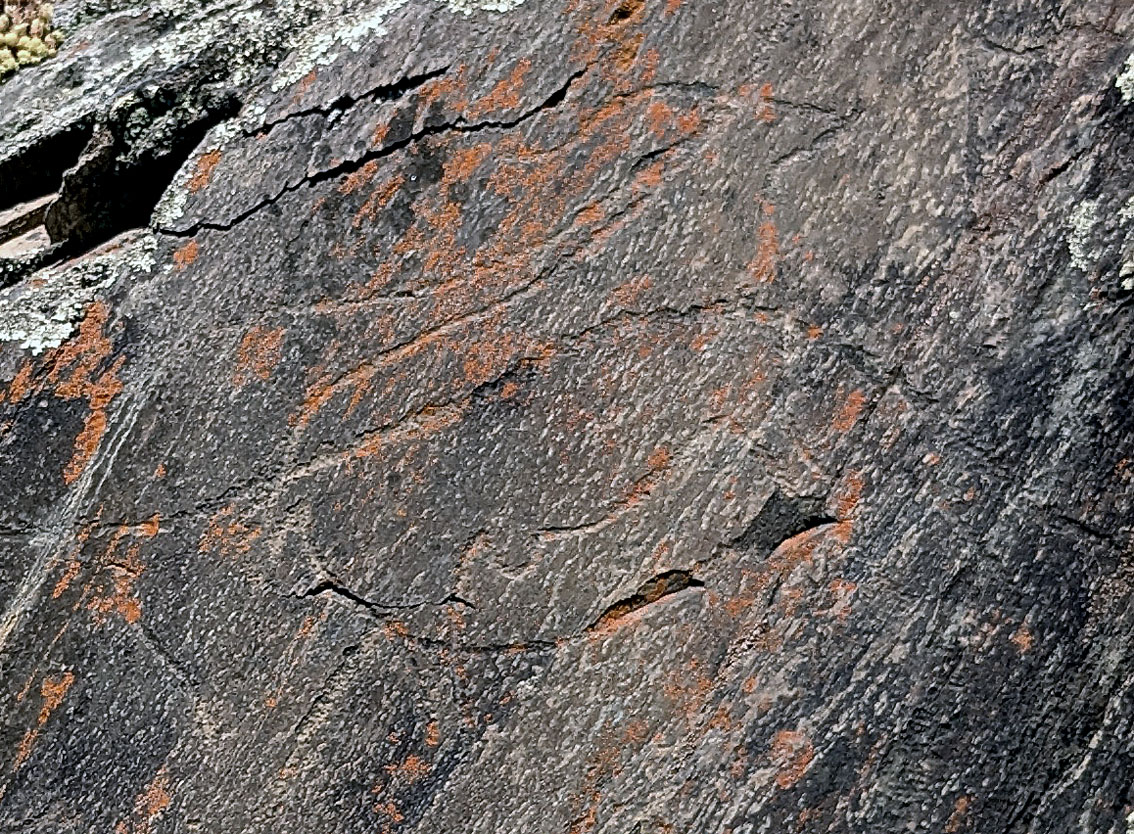
Pecked goat image at Penascosa. Photo by PS
Upper Egyptian Late Palaeolithic rock art
Rock art with a similar dating (minimum age ca. 15 000 – 16 000 BCE by OSL) in Upper Egypt was rediscovered a little later than in Côa. Upper Egypt features vast rock art landscapes, as in Côa with a beginning in the Late Palaeolithic, when the climate was hyperarid and the Nile ran higher than today, and an end close to our own time. Until now 3 Late Palaeolithic sites have been found north of Aswan, with some 10-15 subsites comprising several hundred individual drawings. Survey and documentation projects were headed by the late Belgian archaeologist Dirk Huyge (2009, 2011, 2015, 2026; Qurta and el-Hosh sites) and Egyptian archaeologist Adel Kelany (2008, 2012, 2015; Wadi Abu Subeira site, see several articles on this website). It is not unlikely that more sites will be found by further surveys.
As in Côa, aurochs are very important, and there are gazelles, hippopotami, ibex, hartebeest, fish, and birds – matching the known contemporaneous fauna determined from excavations of nearby Late Palaeolithic occupation sites. Pecked and incised on rather soft, non-metamorphic Nubian sandstone, some figures are deeply carved, so much that they can almost be considered bas-reliefs. The soft nature of the sandstone may have made it somewhat technically simpler to make rock art than in the harder metamorphic rocks of Côa.
Superimposition occurs but is much less pronounced than in the often very complex Côa images. The same is true for motion in the way it seems to occur in Côa. There are, however, many examples of aurochs and other animals with their legs bent as if running.
A group of “headless women” at Qurta bears a strong resemblance to similar female depictions across the European Magdalenian world. Dirk Huge discussed these “anthropomorphs of the Gönnersdorf type” in his 2015 paper, and in other papers he and his team also made many notes on the resemblance between the Upper Egyptian Late Palaeolithic rock art with the Franco-Cantabrian corpus, and, by extrapolation, the Côa rock art. But the question remains: Who influenced who?
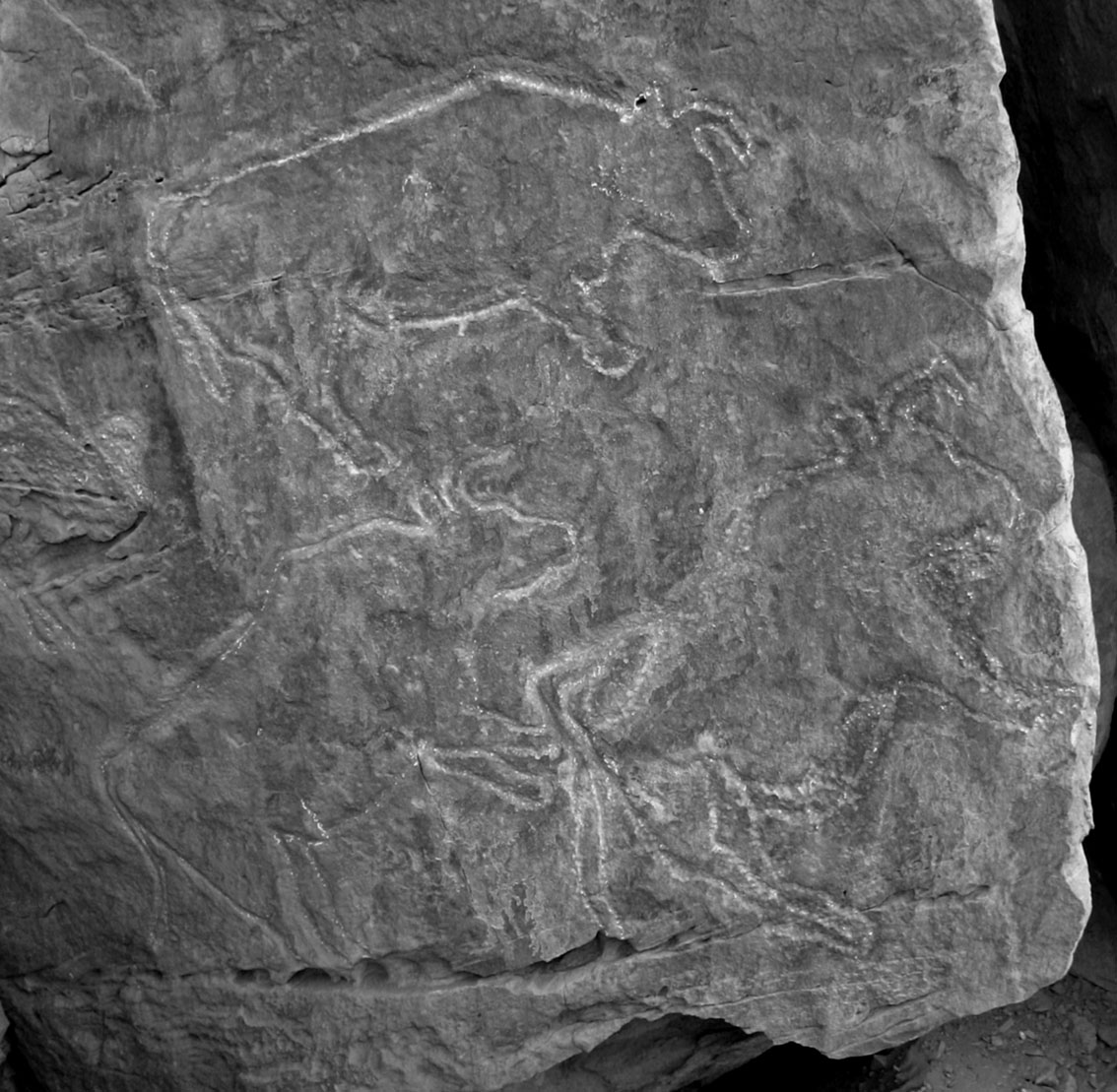
Group of 3 aurochs at Qurta. Photo by PS
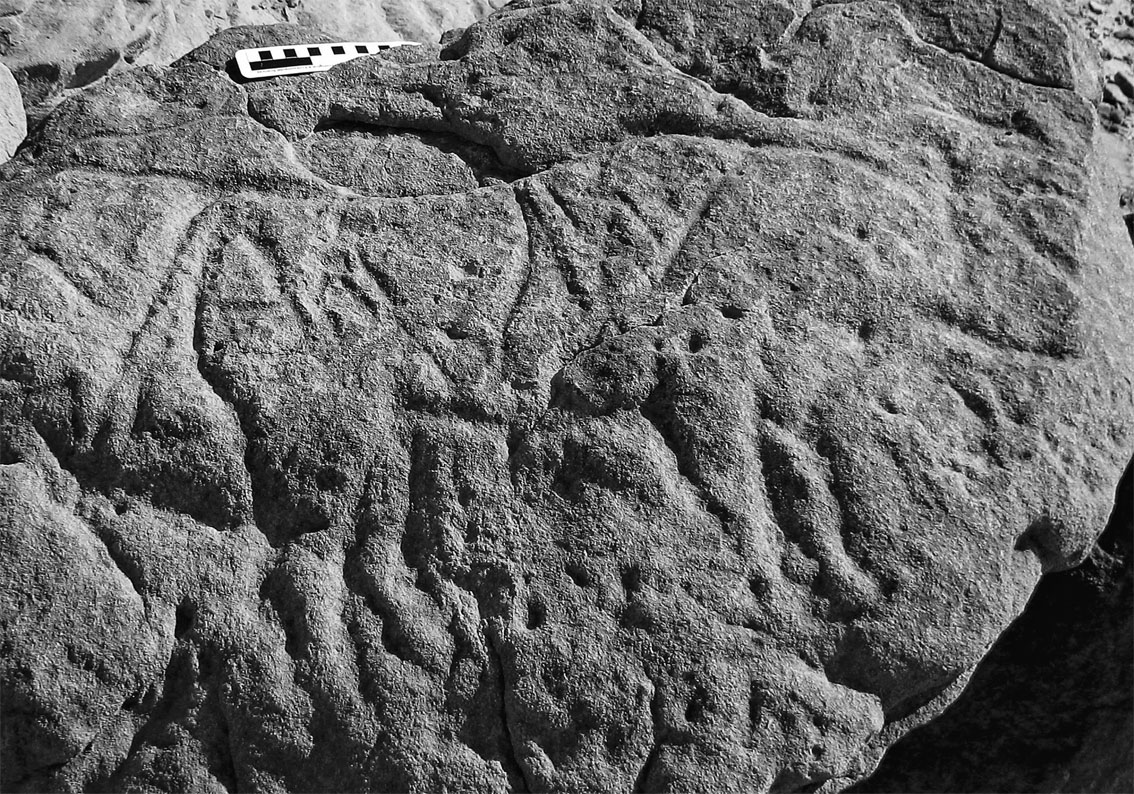
Deeply incised auroch at Wadi Abu Subeira. Photo by PS
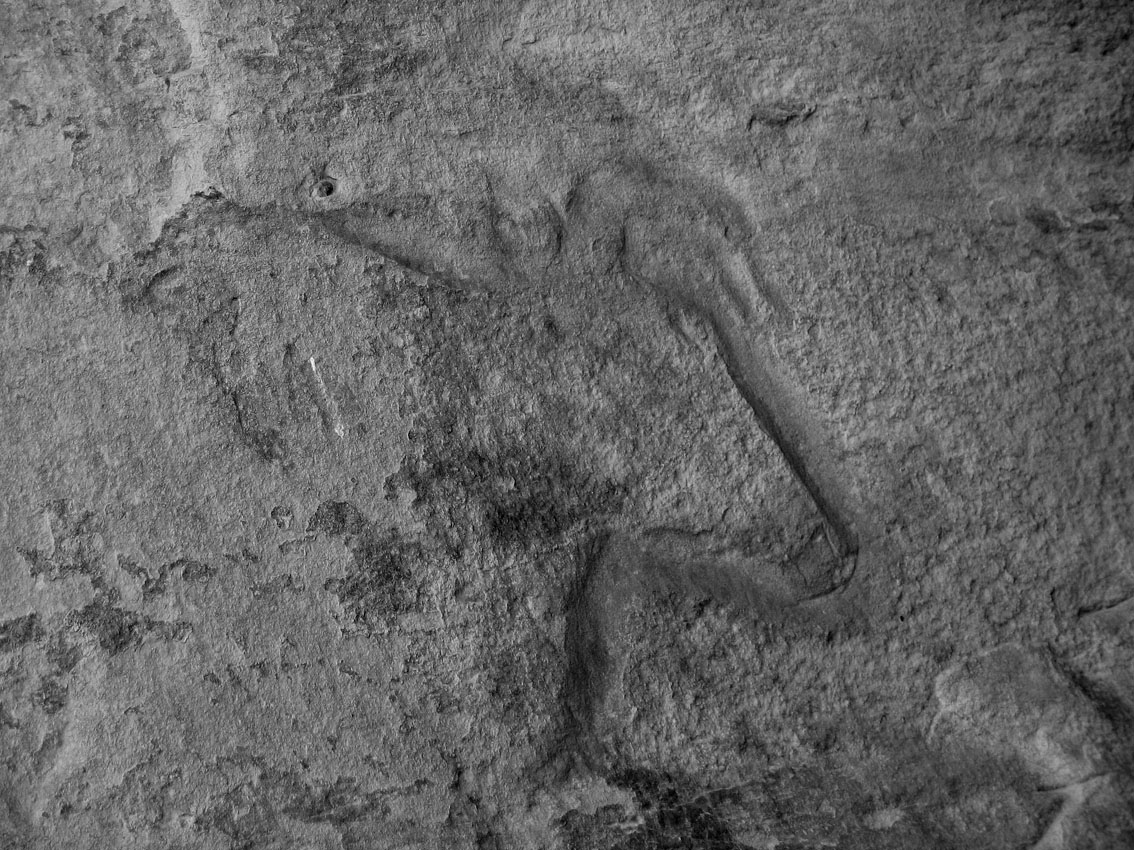
Deeply incised head of auroch at Qurta. Photo by PS
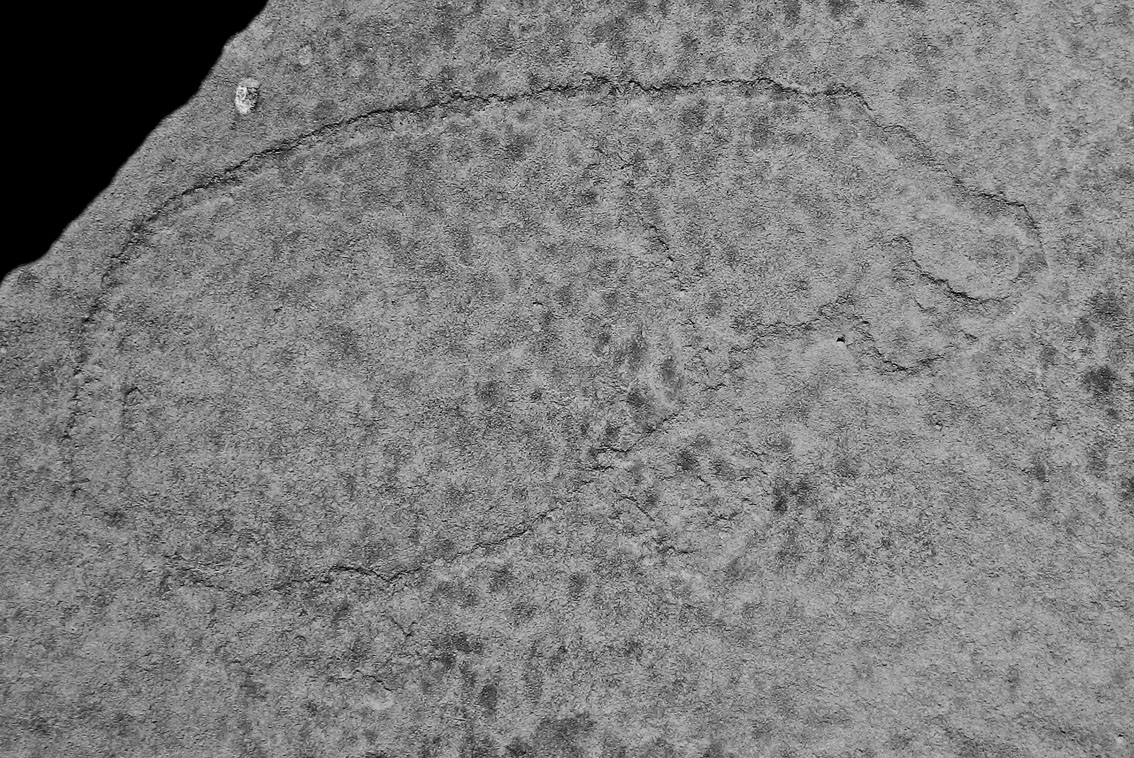
Pecked hippopotamus at Wadi Abu Subeira. Photo by PS
Large Nubian ibex, nearly 2 m long, at Wadi Abu Subeira. Note the auroch in the belly. Photo by PS
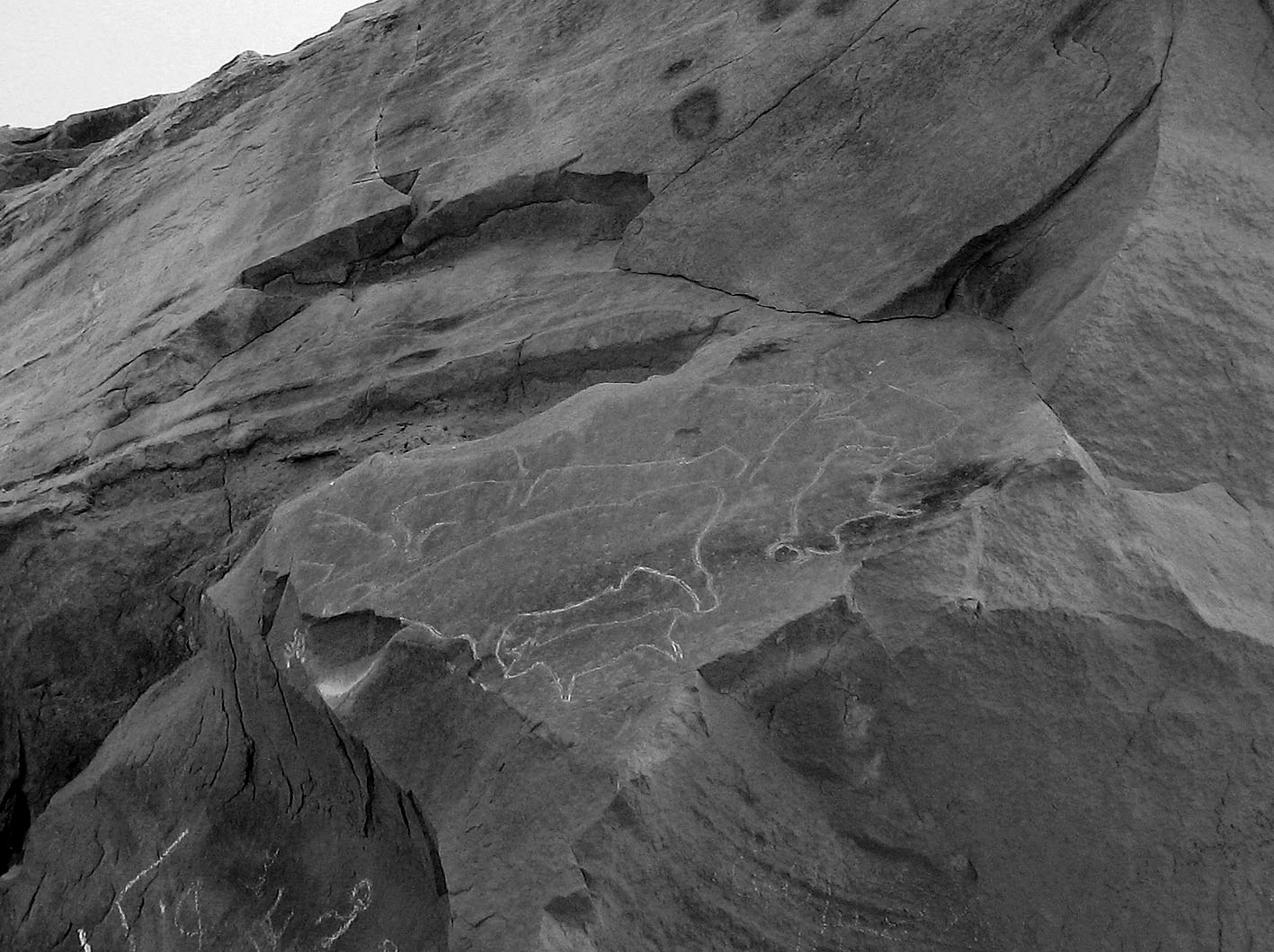
One of the panels in Qurta, high up on cliffs that were previously subject to modern stone quarrying. Photo by PS
Global rock art and its protection
Except for Dirk Huyge’s and his team’s discussions on the parallels between the Egyptian Late Palaeolithic rock art and similar corpora in Europe and elsewhere, lately in Wouter Claes’ appraisal of the Qurta site (2026), there has been little further research. An exception is the work of Emmanuel Guy, and his notes on similarities in animal outline details (undated) and discussion of the Egyptian corpus as a result of mobility and exchange across the Mediterranean and beyond – at a time when the sea level was 100 m lower than today (2025). Guy has also placed Qurta in a much broader anthropological context (2017).
There has also been quite a lot of mention of the Egyptian sites in other scholarly works, such as in the book “Deep-Time Images in the Age of Globalization. Rock Art in the 21st Century” (2024). The traditional Eurocentrism in rock art research is a main theme in the book, challenging the idea that the Franco-Cantabrian cave art is, so to say, “the core of everything”.
In this respect our brief visit to Côa made me think. For in future, global research on contacts and influence, and meaning in rock art, it is crucial that the sites remain physically intact! The well-managed Côa UNESCO site is not a problem – after it was rescued from drowning in a hydropower dam in the 1990s. Many other, but certainly not all rock art sites in Europe and beyond are also managed. In Egypt, however, together with much other archaeology, Late Palaeolithic rock art is under immense risk of destruction, in particular by modern quarrying and mining.
The Wadi Abu Subeira site was “rescued” and managed for some years after rediscovery, but there is now, in practice, no real protection. The site is, sadly, in the hands of industry in these troubled times (Kelany 2025, chapter 4). Action is required – a source of inspiration may well be the Côa rescue campaign.
Discover more from Per Storemyr GeoKultur
Subscribe to get the latest posts sent to your email.





