Ten quarries of Ancient Egypt: 5 – “The loner” at Chephren’s Quarry

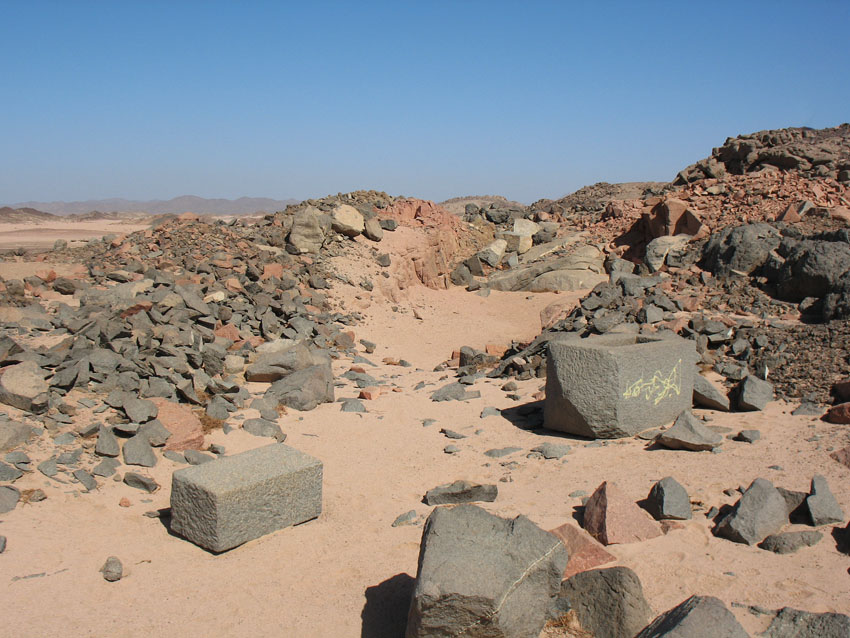
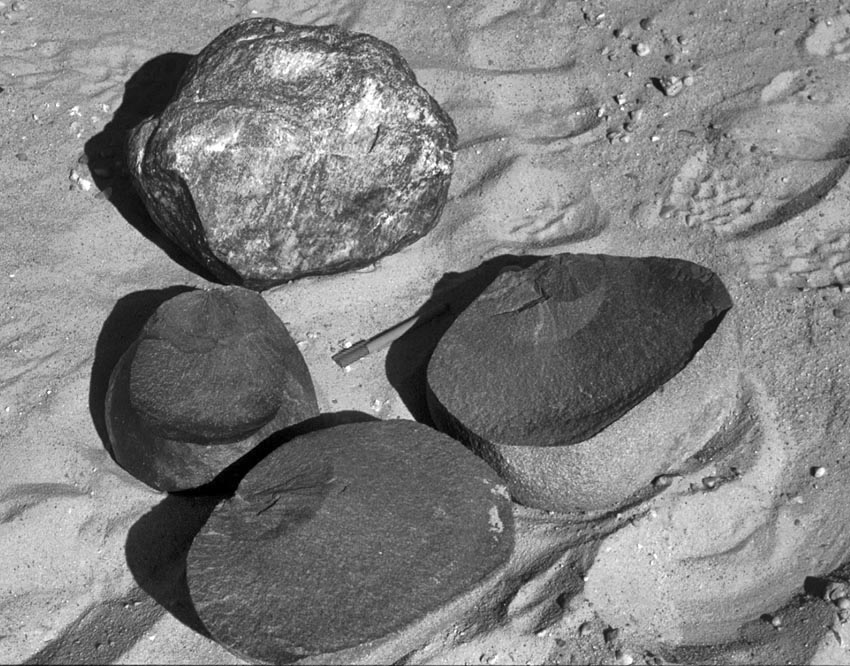
In the middle of nowhere, by Chephren's Quarry. Who was this guy that left the stones here almost 5000 years ago? Photo: Per Storemyr

In the middle of nowhere, by Chephren’s Quarry. Who was this guy that left the stones here almost 5000 years ago? Photo: Per Storemyr

Most of you have heard about the famous, vast Old Kingdom Chephren’s Quarry in the far south of the Western Desert of Egypt. There are hundreds of quarry workings, which took advantage of clusters of big boulders in a flat desert, in total covering an area of almost 100 square kilometres. But there are also expanses of nothing but sand in between major workings. Except at one place, in the middle of nowhere. This is where “the loner” seems to have carried out his work, leaving one half-finished vessel blank, one almost intact hammerstone and one broken one. 5000 years ago. Continue reading

Posted in Ancient Egypt, Archaeology, Old quarries | Tagged , , , , | Leave a comment

Ten quarries of Ancient Egypt: 4 – Wadi el-Muluk limestone quarry

This is just the place where we bumped into the Wadi el-Muluk limestone quarry at sunset in the winter of 1999. Photo: Per Storemyr

This is just the place where we bumped into the Wadi el-Muluk limestone quarry at sunset in the winter of 1999. Photo: Per Storemyr

It was my first trip to Egypt. In 1999, with Tom Heldal, I simply wanted to see as many old quarries as possible. We had several weeks at hand, meagre information on the location of quarries, and no idea of how to get to them. Also, security issues and permits were, back then, not part of our vocabulary. So we usually got a taxi and asked our way around. But in the Valley of the Kings at Luxor we could walk. On our way back from the tombs we recalled that there ought to be a quarry nearby. Off the road we went and 200 metres later we literally fell into one of the finest limestone quarries from the New Kingdom – a quarry full of lines and inscriptions made by red ochre. But why on earth were they painted in the quarry? Continue reading

Posted in Ancient Egypt, Archaeology, Old quarries | Tagged , , , , , , , | 2 Comments

Ten quarries of Ancient Egypt: 3 – The Second Pyramid at Giza

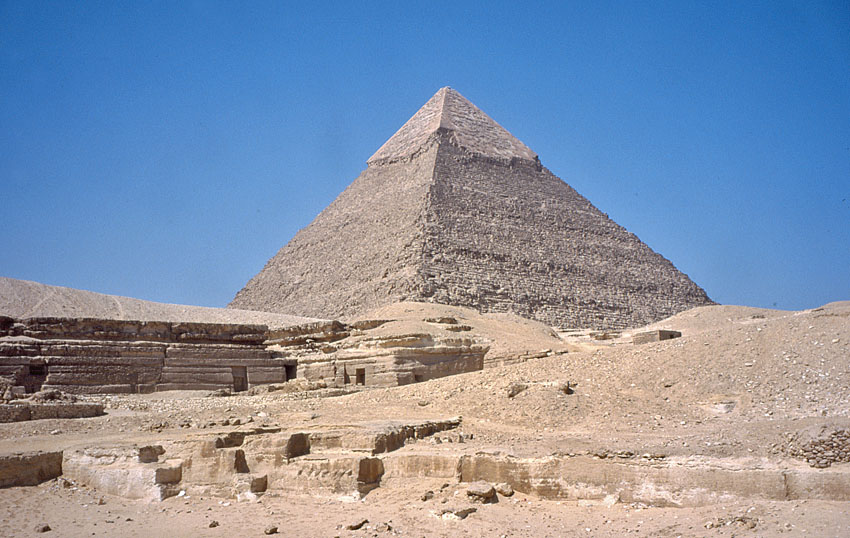
Pharaoh Chephren's pyramid at Giza, with remaining casing stones from the quarries at Tura at the top. In the foreground part of the local quarries that were used to for providing backing stones for the pyramids. Photo: Per Storemyr

Pharaoh Chephren’s pyramid at Giza, with remaining casing stones from the quarries at Tura at the top. In the foreground part of the local quarries that were used for providing backing stones for the pyramids. Photo: Per Storemyr

A quarry? The Second Pyramid?? The Pyramid of Old Kingdom Pharaoh Chephren at Giza??? This is not a quarry – it is a Wonder of the World, it is a Pyramid! False. It is also a quarry! Continue reading

Posted in Ancient Egypt, Archaeology, Old quarries | Tagged , , , | Leave a comment

Ten quarries of Ancient Egypt: 2 – Rod el-Gamra dolerite porphyry quarry

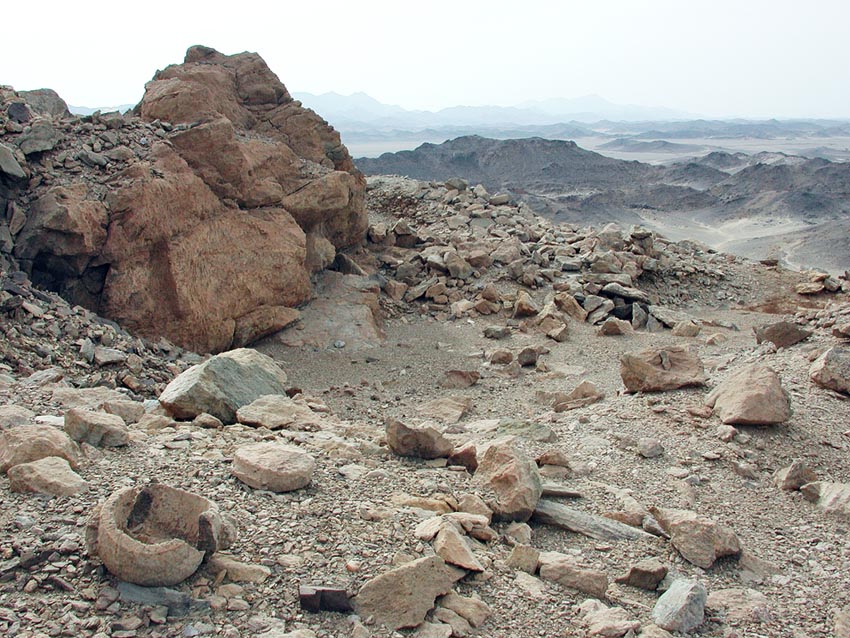
The main quarry workings at Rod el-Gamra in the Eastern Desert of Egypt. Photo: Per Storemyr

The main quarry workings at Rod el-Gamra in the Eastern Desert of Egypt. Photo: Per Storemyr

Rod el-Gamra is a gem. A gem because it is small, even tiny, yet it features the typical archaeology that is found at ancient quarry sites. A gem because what was produced here, so-called naoi, are beautifully strewn in front of the quarry workings. And a gem because it has perhaps the oldest evidence of the use of iron tools in quarry operations in Egypt. But the Ancient Egyptians may not have been the first to quarry stone here, for the hard, volcanic stone show signs of having been worked for stone tools already by Palaeolithic man, tens of thousands of years ago. Continue reading

Posted in Ancient Egypt, Archaeology, Old quarries | Tagged , , , , | 1 Comment

Ten quarries of Ancient Egypt: 1 – Wadi Abu Qureya soapstone quarry

A room with a view! A soapstone quarry at Wadi Abu Qureya in Egypt's Eastern Desert. Raw material was procured at the back, vessels produced in front. Some broke! A true tragedy after hours and days of work! Dating? Middle Ages, perhaps later.

A room with a view! A soapstone quarry at Wadi Abu Qureya in Egypt’s Eastern Desert. Raw material was procured at the back, vessels produced in front. Some broke! A true tragedy after hours and days of work! Dating? Middle Ages, perhaps later. Photo: Per Storemyr

2012 was the first year since 1999 that I was not able to spend one or two or three field seasons in Egypt, exploring ancient quarries, rock art and generally some of the world’s most fascinating archaeology. So I have had to make virtual travels in my photo archives… As the the year draws to a close, I have collected impressions from ten ancient quarries that, over the years, particularly touched me; one for each day until New Year’s Eve. Continue reading

Posted in Ancient Egypt, Archaeology, Old quarries | Tagged , , , | Leave a comment

When in Rome…

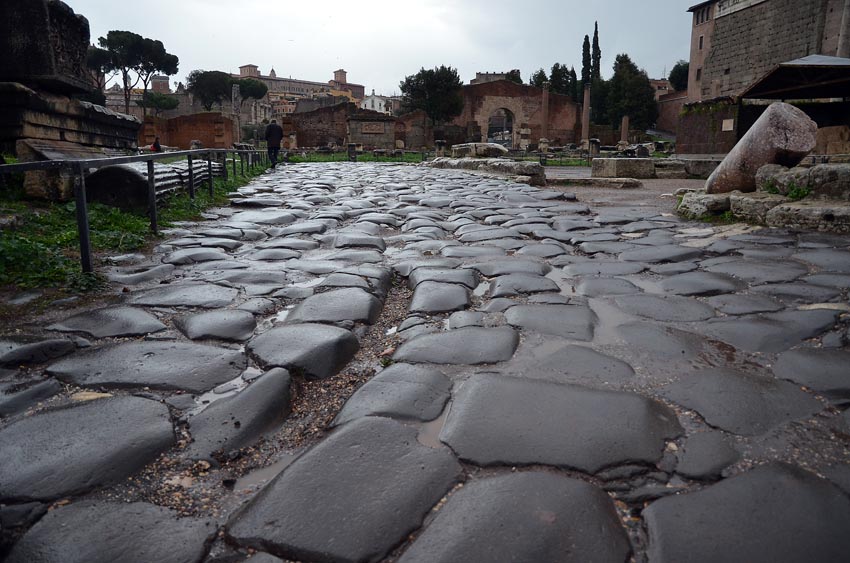
All roads lead to Rome! Basalt paving at Forum Romanum. Photo: Per Storemyr

All roads lead to Rome! Basalt paving at Forum Romanum. Photo: Per Storemyr

When in Rome… What else can you do than to discuss Norwegian archaeology!? So we did, at the beginning of this week, 30+ archaeologists and scientists at a workshop within the Norwegian Research Council’s network programme “Cooperative Research” (NO: Forskning i fellesskap). This programme, running until 2015, aims at bringing the various Norwegian archaeological university museums together to carry out innovative research in the areas of early settlement, farming, and the so-called “outfield” (NO: utmark), the land beyond settlements and agricultural fields. Continue reading

Posted in Archaeology, New projects, Norway, Old quarries | Tagged , , , | Leave a comment

Firesetting in the Stone Age chert quarries at Melsvik in Northern Norway?

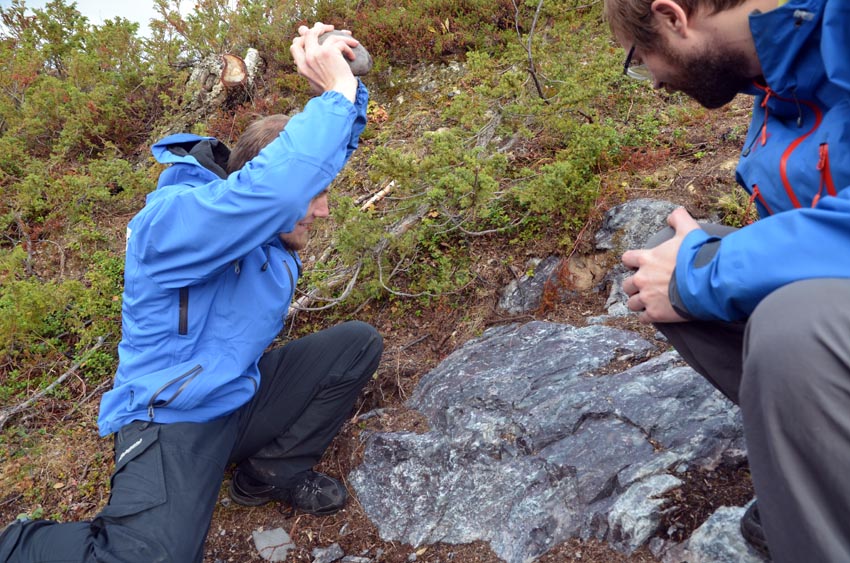
Was it like this the chert at Melsvik was quarried in the Stone Age? Archaeologist Lars Julsrud of Alta Museum applying brute force with a hammerstone (without touching the ancient surface!), his colleague Martin Hykkerud perhaps taking a more sceptic stance. Photo: Per Storemyr

Was it like this the chert at Melsvik was quarried in the Stone Age? Archaeologist Lars Julsrud of Alta Museum applying brute force with a hammerstone (without touching the ancient surface!), his colleague Martin Hykkerud perhaps taking a more sceptic stance. Photo: Per Storemyr

Update: See this blog post for confirmation of firesetting at Melsvik!

A few weeks ago I had the great opportunity to take a look at the large, recently discovered Stone Age chert quarries at Melsvik, some 10 km to the west of Alta in Northern Norway. Very regrettably, the construction of a new highway will soon cut right through this piece of invaluable archaeology – and thus destroy large parts of it. This is the reason why there is an amazing archaeological excavation going on, by the University Museum at Tromsø. Excavations started last summer and will continue next season. On looking at the work areas, and the quarries themselves, I started wondering how on earth this extremely hard rock was actually extracted. Was it by applying brute force using heavy stone pounders, or could firesetting have been used? Continue reading

Posted in Archaeology, Norway, Old quarries | Tagged , , , , , | 8 Comments

The World Heritage Rock Art at Alta in Northern Norway

Reindeer hunter with bow and arrow (low, left) in the prehistoric Alta rock art. Photo: Per Storemyr

Reindeer hunter with bow and arrow (low, left) in the prehistoric Alta rock art. Photo: Per Storemyr

Earlier this week I attended a workshop on conservation of the prehistoric rock art at Alta in Northern Norway. This gave me the opportunity to take a closer look at the great Stone Age panels in the Hjemmeluft area, which is one of five major areas with rock art at the bottom of the extraordinarily scenic Alta Fjord (overview in Tansem & Johansen 2008). Discovered only some 50-60 years ago, the rock art at Alta became inscribed on the World Heritage List in 1985. It is the greatest concentration of rock art in the north of Europe, covering the period from the Stone Age to the Iron Age, or from c. 7000 to c. 2000 years ago. This is truly fascinating hunter-fisher-gatherer rock art, not least because many scenes may have their parallels in much younger, indigenous Sami practices and beliefs. Below is a collection of images and scenes – and landscapes – that particularly impressed me. Continue reading

Posted in Archaeology, Norway, Rock art | Tagged , , | Leave a comment

Making medieval stone architecture: the use of slate in Central Norway

The black phyllite schist quarry called "Sorte Skifer" at Stjørdal in Central Norway. It may have a tradition for procurement of slate back to the Middle Ages. Photo: Per Storemyr

The black phyllite schist quarry called “Sorte Skifer” at Stjørdal in Central Norway. It may have a tradition for procurement of slate back to the Middle Ages. Photo: Per Storemyr

The use of slate has traditions back to the Neolithic in Norway. Stone that were easy to split could be used for anything from the erection of fine burial chambers to the production of knives – phenomena that have been well documented by numerous archaeological excavations. It is much more difficult to say anything sensible about the medieval use of slate in the country. There is, for instance, only one historic reference to slate as roofing material at medieval buildings. This document, written by Bishop Arne in 1308, concerns King Haakon’s Hall in Bergen, built from the middle of the 13th century onward. The building was apparently roofed with fine slate from the famous quarries at Jondal in Hardanger, which are still in operation. However, recent observations in the Trondheim region indicate that slate for roofing – and masonry construction – may have been more widespread, and that the use of slate as a building material for medieval architecture goes back to around 1100. Continue reading

Posted in Archaeology, Norway, Old quarries | Tagged , , , , , , , | 4 Comments

A masterpiece of Epipalaeolithic geometric rock art from el-Hosh, Upper Egypt

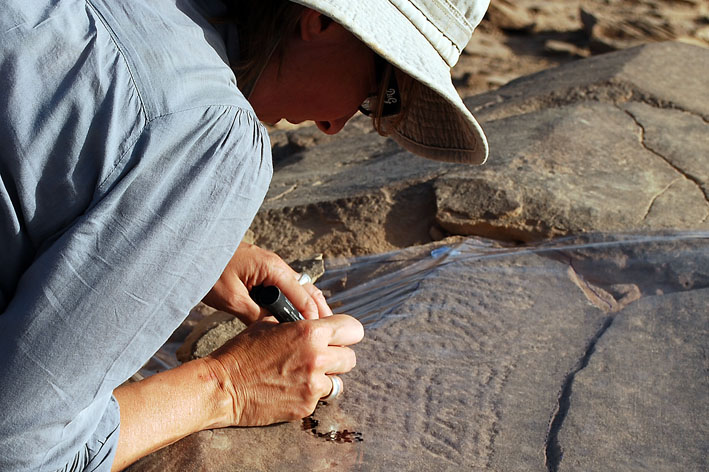
Isabelle Therasse of the Royal Museums of Art and History in Brussels drawing the Epiplalaeolithic masterpiece rock art. Photo: Per Storemyr

Isabelle Therasse of the Royal Museums of Art and History in Brussels tracing the Epiplalaeolithic rock art masterpiece in 2010. Photo: Per Storemyr

The rock art at el-Hosh in Upper Egypt is renowned for its fish trap motifs dating to the Epipalaeolithic period (c. 9000-5000 BC). However, during the 2010 field season undertaken by the Royal Museums of Art and History in Brussels several additional rock art motifs were discovered near the fish traps. One of these motifs is a true masterpiece of Egyptian rock art, which has now been published by Dirk Huyge and myself in the Sahara journal. It is a complex geometric drawing, and though parallels are almost completely lacking, the general style fits with previously discovered ladder motifs at el-Hosh – all dating to the Epipalaeolithic. Continue reading

Posted in Ancient Egypt, Archaeology, Rock art | Tagged , , | 1 Comment