Ten quarries of Ancient Egypt: 8 – The quarry at Widan el-Faras that disappeared

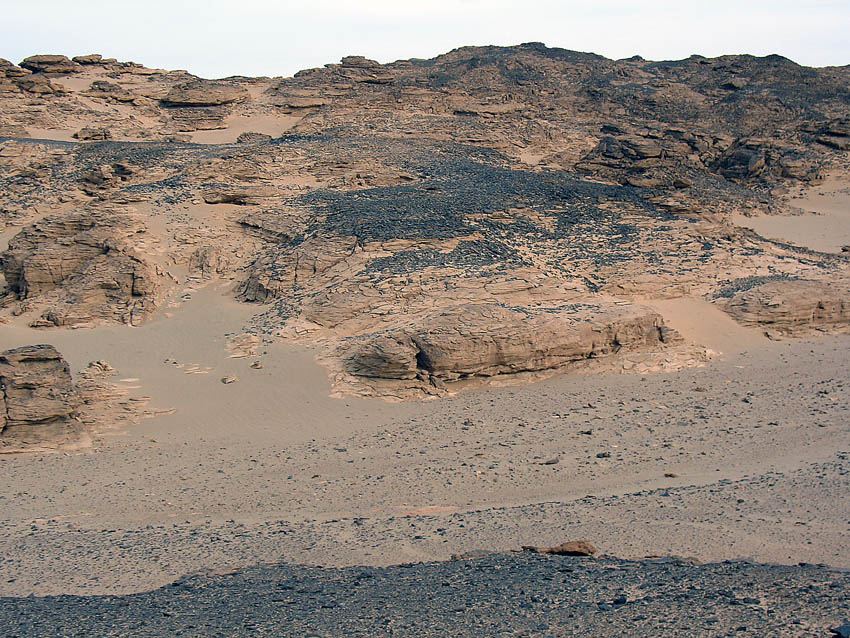
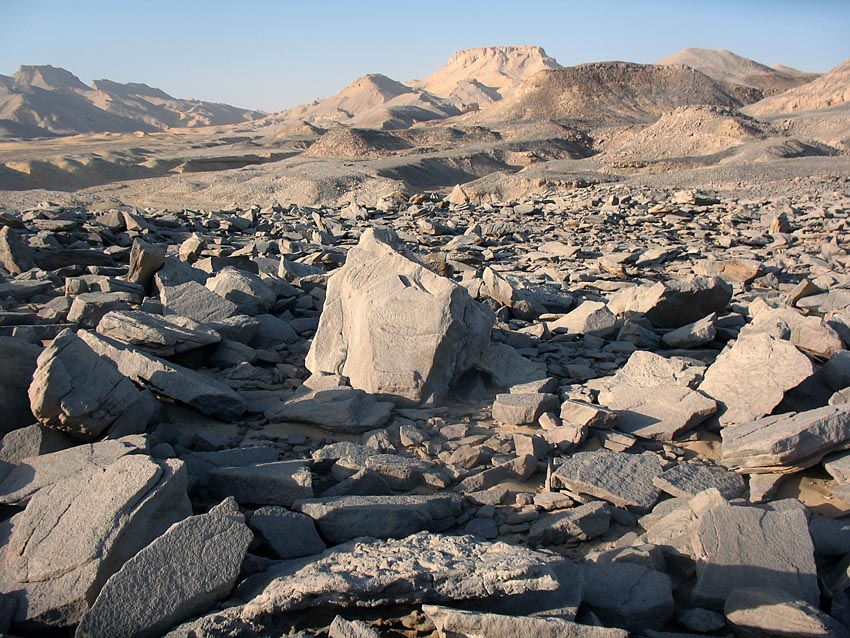
One of the fine Old Kingdom basalt quarries at Widan el-Faras in 2001. Read more to see how it looked like in 2006... Photo: Per Storemyr

One of the fine Old Kingdom basalt quarries at Widan el-Faras in 2001. Read more to see how it looked like in 2006… Photo: Per Storemyr

Many of you know the Old Kingdom basalt quarries at Widan el-Faras in the Northern Faiyum Desert. Some of you are also familiar with the partial destruction of the quarries by modern basalt quarrying. When we first started to work at Widan, about 12 years ago, in a project headed by Elizabeth Bloxam at UCL, the breathtaking lava and escarpment landscape was still quite pristine. A few years later a substantial part of the quarries had been eaten by machines. Though we had learnt by then that many other quarries in Egypt were under threat from modern development, Widan was a key reason for starting the QuarryScapes project – an EU-funded project on conservation of ancient quarries. Continue reading

Posted in Ancient Egypt, Archaeology, Heritage destruction, Old quarries | Tagged , , , , , , , | Leave a comment

Ten quarries of Ancient Egypt: 7 – Tracing a grinding stone quarry in the Sahara

A grinding stone quarry at the north scarp of the Kharga Oasis in the Egyptian Sahara. Discovered by tracing flint hammerstones. Photo: Per Storemyr

A slicified sandstone grinding stone quarry at the north scarp of the Kharga Oasis in the Egyptian Sahara. Discovered by tracing flint hammerstones. Photo: Per Storemyr

In 2007 I was very happy to be invited to join Salima Ikram and Corinna Rossi‘s North Kharga Oasis Survey (NKOS). Great mission, great landscape. The landscape so breathtaking that I immensely enjoyed walking and looking for stone and quarries. Crude flint hammerstones turned up. One after the other, even small depots. Tracing the hammerstones for several kilometres paid off. At the end of the trail was the first grinding stone quarry found in the Western Desert of Egypt! Continue reading

Posted in Ancient Egypt, Archaeology, Old quarries | Tagged , , , , , | 3 Comments

Ten quarries of Ancient Egypt: 6 – Gebel Manzal el-Seyl volcanic tuff quarry

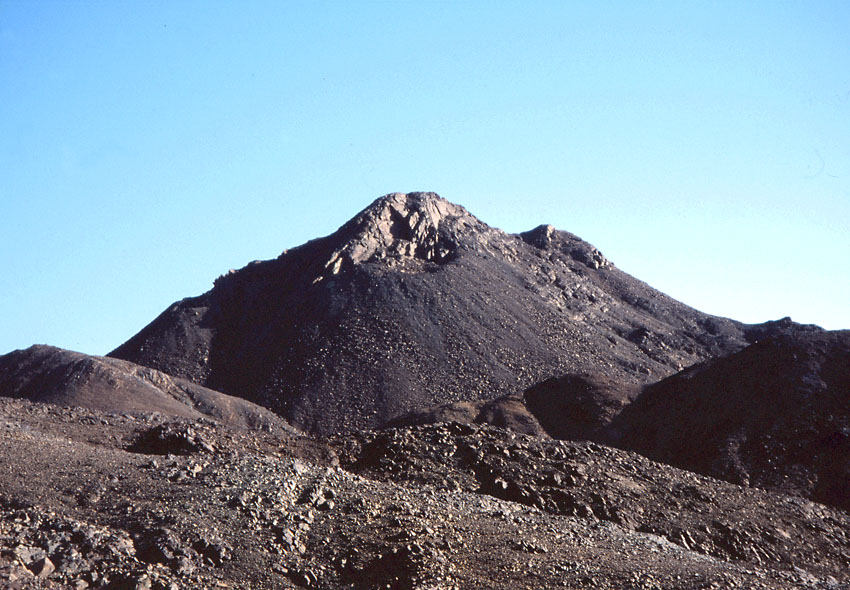
What a quarry! The central summit at Gebel Manzal el-Seyl in the Eastern Desert of Egypt. Nearly 5000 years old. Photo: Per Storemyr

What a quarry! The central summit at Gebel Manzal el-Seyl in the Eastern Desert of Egypt. Nearly 5000 years old. Extraction took place at the top, spoil from the workings were deposited down the slope. Photo: Per Storemyr

Looking for old quarries in Egypt’s Eastern Desert means that you are not only walking in the footsteps of ancient quarrymen, but also of archaeological geologist Jim Harrell. Jim has crisscrossed the Eastern Desert and found several very important quarries over the last 20 years, one of which is Gebel Manzal el-Seyl, in the northern part of the hilly desert. Manzal el-Seyl is so important because it shows that there was organised production of material for stone vessels in remote parts of the Eastern Desert by the Early Dynastic period (2920-2575 BC). This is when vessel production was at its peak in Egypt. Continue reading

Posted in Ancient Egypt, Archaeology, Old quarries | Tagged , , , , , | Leave a comment

Ten quarries of Ancient Egypt: 5 – “The loner” at Chephren’s Quarry

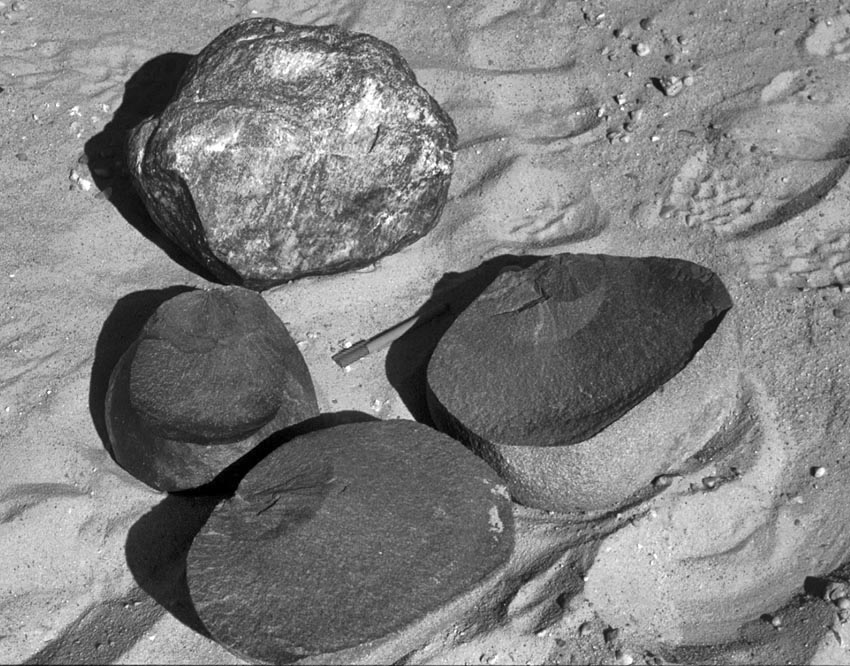
In the middle of nowhere, by Chephren's Quarry. Who was this guy that left the stones here almost 5000 years ago? Photo: Per Storemyr

In the middle of nowhere, by Chephren’s Quarry. Who was this guy that left the stones here almost 5000 years ago? Photo: Per Storemyr

Most of you have heard about the famous, vast Old Kingdom Chephren’s Quarry in the far south of the Western Desert of Egypt. There are hundreds of quarry workings, which took advantage of clusters of big boulders in a flat desert, in total covering an area of almost 100 square kilometres. But there are also expanses of nothing but sand in between major workings. Except at one place, in the middle of nowhere. This is where “the loner” seems to have carried out his work, leaving one half-finished vessel blank, one almost intact hammerstone and one broken one. 5000 years ago. Continue reading

Posted in Ancient Egypt, Archaeology, Old quarries | Tagged , , , , | Leave a comment

Ten quarries of Ancient Egypt: 4 – Wadi el-Muluk limestone quarry

This is just the place where we bumped into the Wadi el-Muluk limestone quarry at sunset in the winter of 1999. Photo: Per Storemyr

This is just the place where we bumped into the Wadi el-Muluk limestone quarry at sunset in the winter of 1999. Photo: Per Storemyr

It was my first trip to Egypt. In 1999, with Tom Heldal, I simply wanted to see as many old quarries as possible. We had several weeks at hand, meagre information on the location of quarries, and no idea of how to get to them. Also, security issues and permits were, back then, not part of our vocabulary. So we usually got a taxi and asked our way around. But in the Valley of the Kings at Luxor we could walk. On our way back from the tombs we recalled that there ought to be a quarry nearby. Off the road we went and 200 metres later we literally fell into one of the finest limestone quarries from the New Kingdom – a quarry full of lines and inscriptions made by red ochre. But why on earth were they painted in the quarry? Continue reading

Posted in Ancient Egypt, Archaeology, Old quarries | Tagged , , , , , , , | 2 Comments

Ten quarries of Ancient Egypt: 3 – The Second Pyramid at Giza

Pharaoh Chephren's pyramid at Giza, with remaining casing stones from the quarries at Tura at the top. In the foreground part of the local quarries that were used to for providing backing stones for the pyramids. Photo: Per Storemyr

Pharaoh Chephren’s pyramid at Giza, with remaining casing stones from the quarries at Tura at the top. In the foreground part of the local quarries that were used for providing backing stones for the pyramids. Photo: Per Storemyr

A quarry? The Second Pyramid?? The Pyramid of Old Kingdom Pharaoh Chephren at Giza??? This is not a quarry – it is a Wonder of the World, it is a Pyramid! False. It is also a quarry! Continue reading

Posted in Ancient Egypt, Archaeology, Old quarries | Tagged , , , | Leave a comment

Ten quarries of Ancient Egypt: 2 – Rod el-Gamra dolerite porphyry quarry

The main quarry workings at Rod el-Gamra in the Eastern Desert of Egypt. Photo: Per Storemyr

The main quarry workings at Rod el-Gamra in the Eastern Desert of Egypt. Photo: Per Storemyr

Rod el-Gamra is a gem. A gem because it is small, even tiny, yet it features the typical archaeology that is found at ancient quarry sites. A gem because what was produced here, so-called naoi, are beautifully strewn in front of the quarry workings. And a gem because it has perhaps the oldest evidence of the use of iron tools in quarry operations in Egypt. But the Ancient Egyptians may not have been the first to quarry stone here, for the hard, volcanic stone show signs of having been worked for stone tools already by Palaeolithic man, tens of thousands of years ago. Continue reading

Posted in Ancient Egypt, Archaeology, Old quarries | Tagged , , , , | 1 Comment

Ten quarries of Ancient Egypt: 1 – Wadi Abu Qureya soapstone quarry

A room with a view! A soapstone quarry at Wadi Abu Qureya in Egypt's Eastern Desert. Raw material was procured at the back, vessels produced in front. Some broke! A true tragedy after hours and days of work! Dating? Middle Ages, perhaps later.

A room with a view! A soapstone quarry at Wadi Abu Qureya in Egypt’s Eastern Desert. Raw material was procured at the back, vessels produced in front. Some broke! A true tragedy after hours and days of work! Dating? Middle Ages, perhaps later. Photo: Per Storemyr

2012 was the first year since 1999 that I was not able to spend one or two or three field seasons in Egypt, exploring ancient quarries, rock art and generally some of the world’s most fascinating archaeology. So I have had to make virtual travels in my photo archives… As the the year draws to a close, I have collected impressions from ten ancient quarries that, over the years, particularly touched me; one for each day until New Year’s Eve. Continue reading

Posted in Ancient Egypt, Archaeology, Old quarries | Tagged , , , | Leave a comment

When in Rome…

All roads lead to Rome! Basalt paving at Forum Romanum. Photo: Per Storemyr

All roads lead to Rome! Basalt paving at Forum Romanum. Photo: Per Storemyr

When in Rome… What else can you do than to discuss Norwegian archaeology!? So we did, at the beginning of this week, 30+ archaeologists and scientists at a workshop within the Norwegian Research Council’s network programme “Cooperative Research” (NO: Forskning i fellesskap). This programme, running until 2015, aims at bringing the various Norwegian archaeological university museums together to carry out innovative research in the areas of early settlement, farming, and the so-called “outfield” (NO: utmark), the land beyond settlements and agricultural fields. Continue reading

Posted in Archaeology, New projects, Norway, Old quarries | Tagged , , , | Leave a comment

Firesetting in the Stone Age chert quarries at Melsvik in Northern Norway?

Was it like this the chert at Melsvik was quarried in the Stone Age? Archaeologist Lars Julsrud of Alta Museum applying brute force with a hammerstone (without touching the ancient surface!), his colleague Martin Hykkerud perhaps taking a more sceptic stance. Photo: Per Storemyr

Was it like this the chert at Melsvik was quarried in the Stone Age? Archaeologist Lars Julsrud of Alta Museum applying brute force with a hammerstone (without touching the ancient surface!), his colleague Martin Hykkerud perhaps taking a more sceptic stance. Photo: Per Storemyr

Update: See this blog post for confirmation of firesetting at Melsvik!

A few weeks ago I had the great opportunity to take a look at the large, recently discovered Stone Age chert quarries at Melsvik, some 10 km to the west of Alta in Northern Norway. Very regrettably, the construction of a new highway will soon cut right through this piece of invaluable archaeology – and thus destroy large parts of it. This is the reason why there is an amazing archaeological excavation going on, by the University Museum at Tromsø. Excavations started last summer and will continue next season. On looking at the work areas, and the quarries themselves, I started wondering how on earth this extremely hard rock was actually extracted. Was it by applying brute force using heavy stone pounders, or could firesetting have been used? Continue reading

Posted in Archaeology, Norway, Old quarries | Tagged , , , , , | 8 Comments