An update after months of inactivity at my website

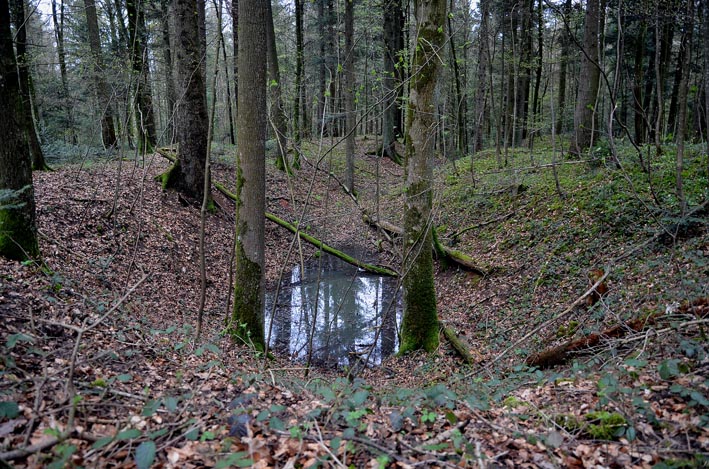
Overgrown quarry pits and raised spoil heaps in the old Riniken millstone quarry landscape by Brugg in Canton Aargau, Switzerland. Photo: Per Storemyr

Overgrown quarry pits and raised spoil heaps in the old Riniken millstone quarry landscape by Brugg in Canton Aargau, Switzerland. Photo: Per Storemyr

I’ve been busy over the last several months and so little has happened at the blog and website of my firm. A simple equation may provide a good explanation: Family and kids + professional responsibilities = no blogging! The first part of the equation ought to be pretty obvious. As regards the second part this is probably evident, too: Suddenly finding yourself confronted with deadlines and tenders! Continue reading

Posted in New projects | Leave a comment

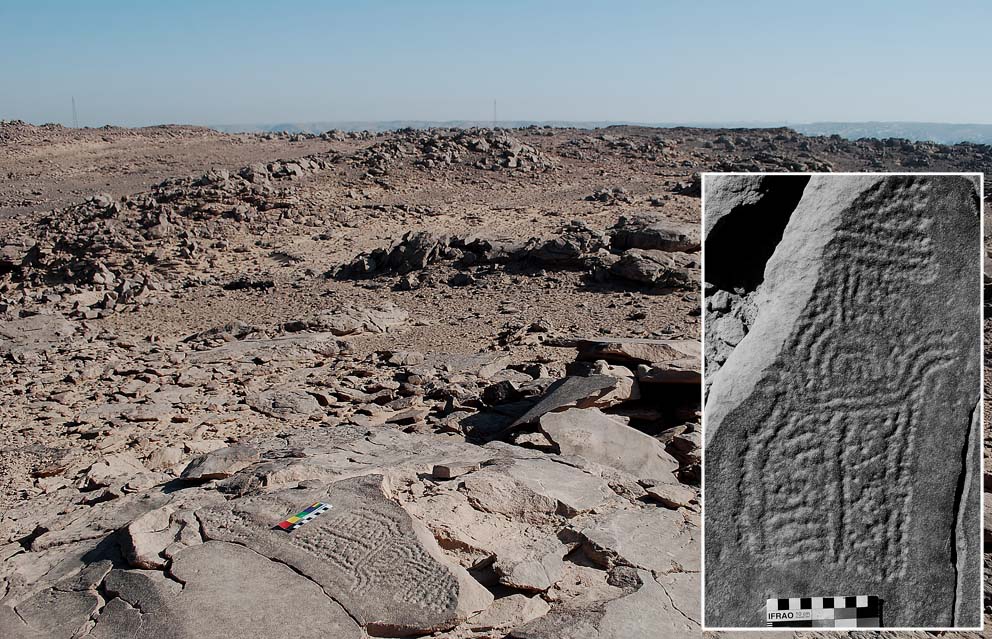
The little-known archaeology of Gharb Aswan, Upper Egypt

Aerial view of the First Nile Cataract in 1936. The Old Aswan Dam in front, by then tiny Aswan City top right and the desert at Gharb Aswan at left. Source: Library of Congress.

Aerial view of the First Nile Cataract in 1936. The Old Aswan Dam in front, by then tiny Aswan City at top right and the desert at Gharb Aswan to the left. Source: Library of Congress. Image enhanced.

Gharb Aswan – or West Aswan – is the home to some 50.000 Nubian peoples on the west bank of the Nile, by the first cataract opposite the city of Aswan. Among archaeologists and tourists the area is renowned for the Tombs of the Nobles at Qubbet el-Hawa and the Coptic St. Simeon’s monastery, both on the UNESCO World Heritage List. But Gharb Aswan is much more than this, for here it is possible to follow human interaction with the landscape for millennia, almost throughout the history of humankind. With a focus on the unique stone working traditions, here’s a synopsis of the “unknown” archaeology of this beautiful desert area – with slideshow, map, bibliography and an overview of missions that have worked here. Continue reading

Posted in Ancient Egypt, Archaeology, Old quarries, Rock art | Tagged , , , , | 10 Comments

The old quarry that was reused as a beer brewery

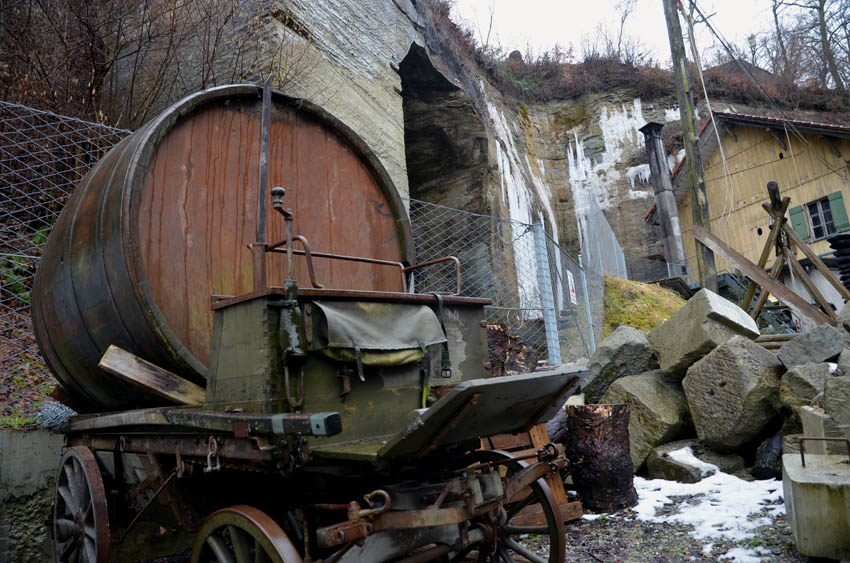
Old horse cart with beer barrel in the historic Wabern quarry by Berne, Switzerland. Photo: Per Storemyr

Old horse cart with beer barrel in the historic Wabern quarry by Berne, Switzerland. Photo: Per Storemyr

Working with the Berne Minster Workshop on mapping the quarries used for the cathedral, I visited the Wabern quarry just outside the city centre yesterday. Though it is unclear to what extent it was employed for the cathedral in the Middle Ages, it is a most remarkable quarry: For it was reused as a brewery for “Gurten Beer” from the 1860s on. Since I have noted  the link between stone extraction and beer drinking through history (see last part of this story), I thought I ought to post the photo above of a wonderful old horse cart with a beer barrel remaining in the quarries. Continue reading

Posted in Archaeology, New projects, Old quarries, Switzerland | Tagged , , , , , | 2 Comments

Stone extraction with pickaxes in Ancient Egypt: Fact or fiction?

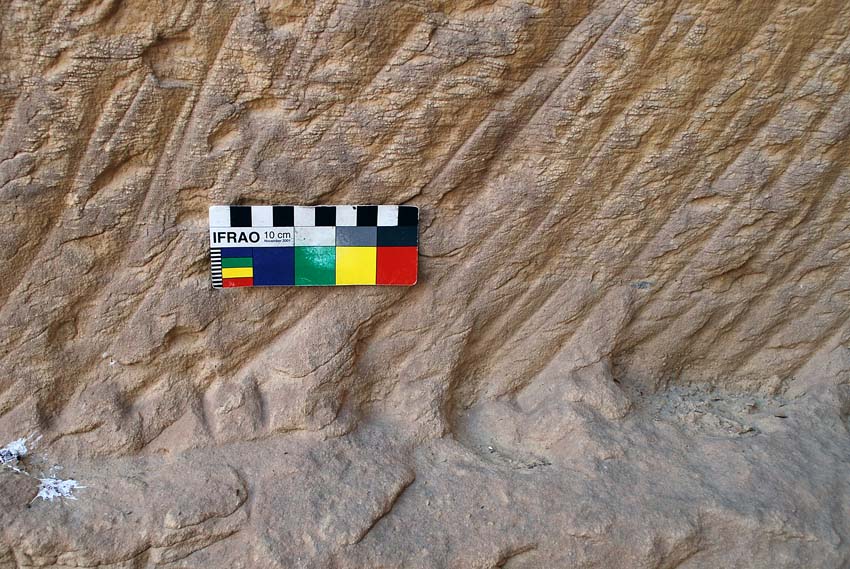
Fact, no fiction: Evidence for the use of pickaxes with a narrow blade forming the cutting edge. Quarry by Shesmetet temple in Wadi el-Hillal by Elkab in Upper Egypt. Photo: Per Storemyr

Fact, no fiction: Evidence for the use of pickaxes with a narrow blade forming the cutting edge. Quarry by Shesmetet temple in Wadi el-Hillal by Elkab in Upper Egypt. Photo: Per Storemyr

Ancient Egyptian quarrying of softstone, such as sandstone and limestone, is commonly described as having been done exclusively by chisels struck with wooden mallets, even through the Roman period. In this way trenches separating each block were made, and then the block was loosened at the underside with various types of wedges. But this is not the end of the story. In this article I will show – perhaps the first – indisputable evidence that pickaxes were also used, albeit possibly on a minor scale. Continue reading

Posted in Ancient Egypt, Archaeology, Old quarries | Tagged , , , , | 7 Comments

Ten quarries of Ancient Egypt: Series summary

Egypt is world-renowned for its ancient quarries. Without them civilisation as we know it along the Nile would not have been possible. There are many spectacular quarries, popular way beyond the archaeological community. But there is also an enormous amount of quarries that rarely get the headlines. In the series Ten quarries of Ancient Egypt I have tried to highlight a few of those “unknowns”. They were the ones that particularly touched me during many seasons of walking the deserts bordering the Nile.

Thanks for reading, and for sharing the stories on Facebook between Christmas and New Year 2012/2013! Let’s hope that the quarries, most of which are thousands of years old, will remain there in 2013 and for millennia to come, and not be destroyed by modern development and bulldozers. So that we can enjoy them – and those after us!

Here’s the link to all the ten stories: Ten quarries of Ancient Egypt. Or you can click on the photos in the gallery above to get to the quarries…

Posted in Ancient Egypt, Archaeology, Old quarries | Tagged , , , | 8 Comments

Ten quarries of Ancient Egypt: 10 – Firework!

Happy New Year with firework in the ancient quarries!

Happy New Year with firework in the ancient quarries! Photo: Per Storemyr

It’s New Year’s Eve. Happy New Year to you all! What could be better than to end this little series on Ancient Egyptian quarries with firework! It was Reginald Engelbach that first suggested the use of fire for stone quarrying in Ancient Egypt, when he excavated the Unfinished Obelisk at Aswan almost a hundred years ago. Over the last decade much more evidence has been found in Aswan and elsewhere – and Adel Kelany and his team of archaeologists has even made experiments trying to figure out how firesetting works. Take a look at the following pictures to see how it looks like when old Egyptian stone has been subjected to fire! Continue reading

Posted in Ancient Egypt, Archaeology, Old quarries | Tagged , , , , , | 3 Comments

Ten quarries of Ancient Egypt: 9 – Palaeolithic quarries in the Eastern Desert

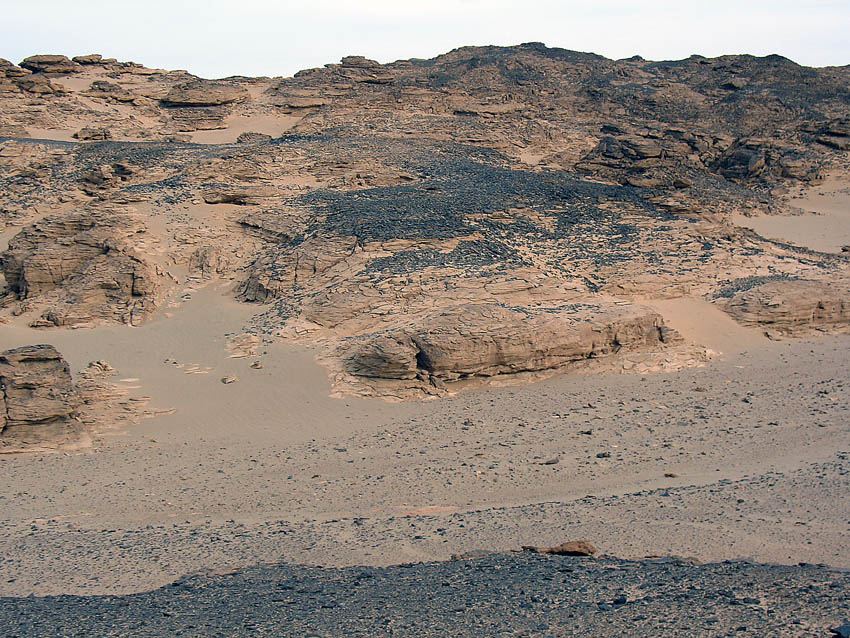
This is a great Palaeolithic quarry by Wadi Beiza in the Eastern Desert. It was the black, hard stone that was exploited. Photo: Per Storemyr

This is a great Palaeolithic quarry by Wadi Beiza in the Eastern Desert of Egypt. It was the black, hard stone that was exploited. Photo: Per Storemyr

Practically the whole of Egypt is dotted with quarries and tool workshops dating to the Lower and Middle Palaeolithic (some 3-400.000 to 30.000 years ago), showing how our predecessors adapted to the geological resources along the Nile and in the adjacent deserts. I’m very far from an expert on these periods, but over the years I’ve often been truly fascinated by quarries from these times that just popped up while looking for much later archaeological remains. In 2006, while on a tourist trip in the Eastern Desert with Red Sea Desert Adventures, we started to look for Palaeolithic tools and quarries. They were really very common. An experience we share with other people that have traversed the Eastern Desert. Continue reading

Posted in Ancient Egypt, Archaeology, Old quarries | Tagged , , , , | 2 Comments

Ten quarries of Ancient Egypt: 8 – The quarry at Widan el-Faras that disappeared

One of the fine Old Kingdom basalt quarries at Widan el-Faras in 2001. Read more to see how it looked like in 2006... Photo: Per Storemyr

One of the fine Old Kingdom basalt quarries at Widan el-Faras in 2001. Read more to see how it looked like in 2006… Photo: Per Storemyr

Many of you know the Old Kingdom basalt quarries at Widan el-Faras in the Northern Faiyum Desert. Some of you are also familiar with the partial destruction of the quarries by modern basalt quarrying. When we first started to work at Widan, about 12 years ago, in a project headed by Elizabeth Bloxam at UCL, the breathtaking lava and escarpment landscape was still quite pristine. A few years later a substantial part of the quarries had been eaten by machines. Though we had learnt by then that many other quarries in Egypt were under threat from modern development, Widan was a key reason for starting the QuarryScapes project – an EU-funded project on conservation of ancient quarries. Continue reading

Posted in Ancient Egypt, Archaeology, Heritage destruction, Old quarries | Tagged , , , , , , , | Leave a comment

Ten quarries of Ancient Egypt: 7 – Tracing a grinding stone quarry in the Sahara

A grinding stone quarry at the north scarp of the Kharga Oasis in the Egyptian Sahara. Discovered by tracing flint hammerstones. Photo: Per Storemyr

A slicified sandstone grinding stone quarry at the north scarp of the Kharga Oasis in the Egyptian Sahara. Discovered by tracing flint hammerstones. Photo: Per Storemyr

In 2007 I was very happy to be invited to join Salima Ikram and Corinna Rossi‘s North Kharga Oasis Survey (NKOS). Great mission, great landscape. The landscape so breathtaking that I immensely enjoyed walking and looking for stone and quarries. Crude flint hammerstones turned up. One after the other, even small depots. Tracing the hammerstones for several kilometres paid off. At the end of the trail was the first grinding stone quarry found in the Western Desert of Egypt! Continue reading

Posted in Ancient Egypt, Archaeology, Old quarries | Tagged , , , , , | 3 Comments

Ten quarries of Ancient Egypt: 6 – Gebel Manzal el-Seyl volcanic tuff quarry

What a quarry! The central summit at Gebel Manzal el-Seyl in the Eastern Desert of Egypt. Nearly 5000 years old. Photo: Per Storemyr

What a quarry! The central summit at Gebel Manzal el-Seyl in the Eastern Desert of Egypt. Nearly 5000 years old. Extraction took place at the top, spoil from the workings were deposited down the slope. Photo: Per Storemyr

Looking for old quarries in Egypt’s Eastern Desert means that you are not only walking in the footsteps of ancient quarrymen, but also of archaeological geologist Jim Harrell. Jim has crisscrossed the Eastern Desert and found several very important quarries over the last 20 years, one of which is Gebel Manzal el-Seyl, in the northern part of the hilly desert. Manzal el-Seyl is so important because it shows that there was organised production of material for stone vessels in remote parts of the Eastern Desert by the Early Dynastic period (2920-2575 BC). This is when vessel production was at its peak in Egypt. Continue reading

Posted in Ancient Egypt, Archaeology, Old quarries | Tagged , , , , , | Leave a comment