Cleopatra’s Needle: Tracing obelisk weathering with old photos

The New York obelisk at Alexandria in the late 1850s

The New York obelisk at Alexandria in the late 1850s. Source: PPOC

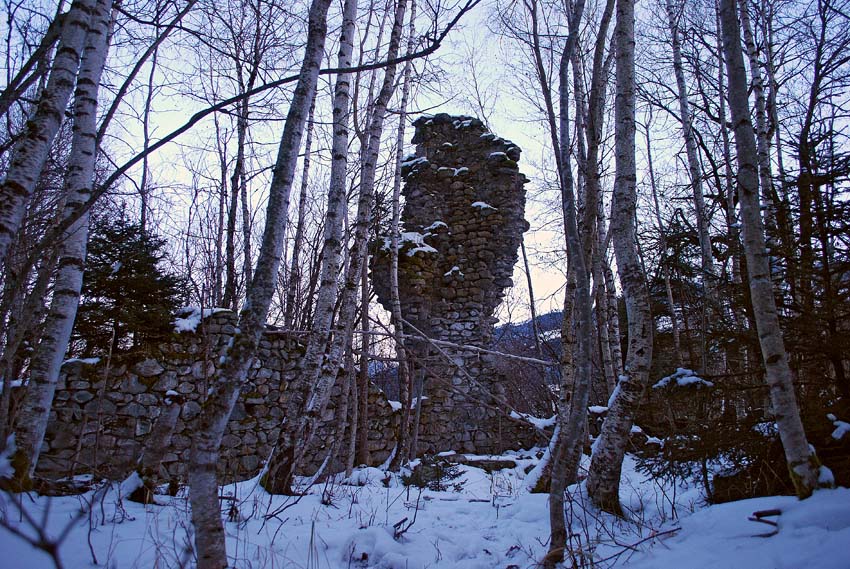
Historic photos are essential for research on monument weathering. With free internet access to archives, such photos are now easier to find than previously. Below, I will show the case of Cleopatra’s Needle, a famous Ancient Egyptian obelisk transferred to New York in 1880. Its severe weathering occupied Erhard Winkler, a pioneer on the history of monument weathering. But Winkler overlooked a key photo that would have seriously altered his interpretations. Continue reading

Posted in Ancient Egypt, Archaeology, Monument conservation, Weathering history | Tagged , , , , , , , , , , , , | 11 Comments

Stone weathering at the westernmost coast of Norway

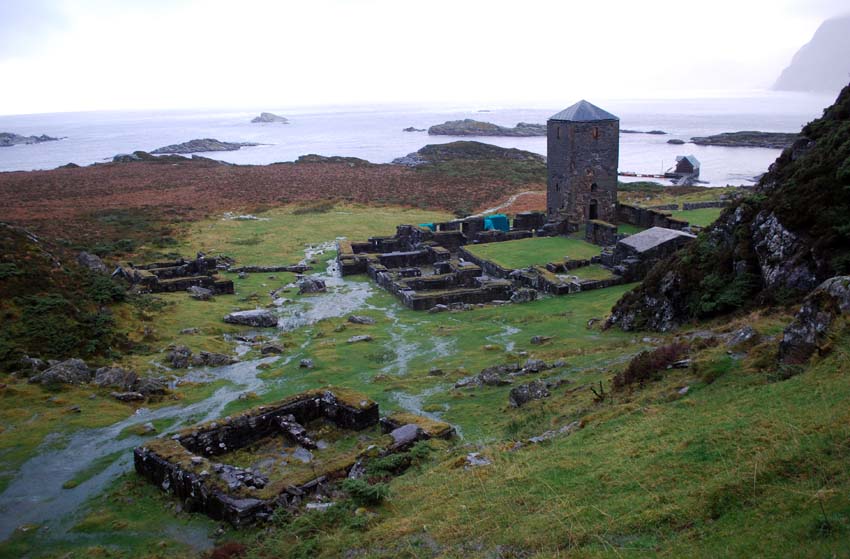
Selja abbey ruins during heavy rain in November 2010

Selja abbey ruins during heavy rain in November 2010

As probably one of only very few monuments globally, the ruined Selja medieval abbey off the westernmost coast of Norway is built from a metamorphic olivine stone (dunite) rich in talc. The combination of a hard olivine matrix and soft talc veins makes the stone weather in a peculiar way – and it’s not the soft mineral that disappears, but the hard one! Continue reading

Posted in Archaeology, Monument conservation, New projects, Norway, Ruins, Weathering history | Tagged , , , , , , | 2 Comments

Tüfels Chilen: Quarrying in the Church of the Devil

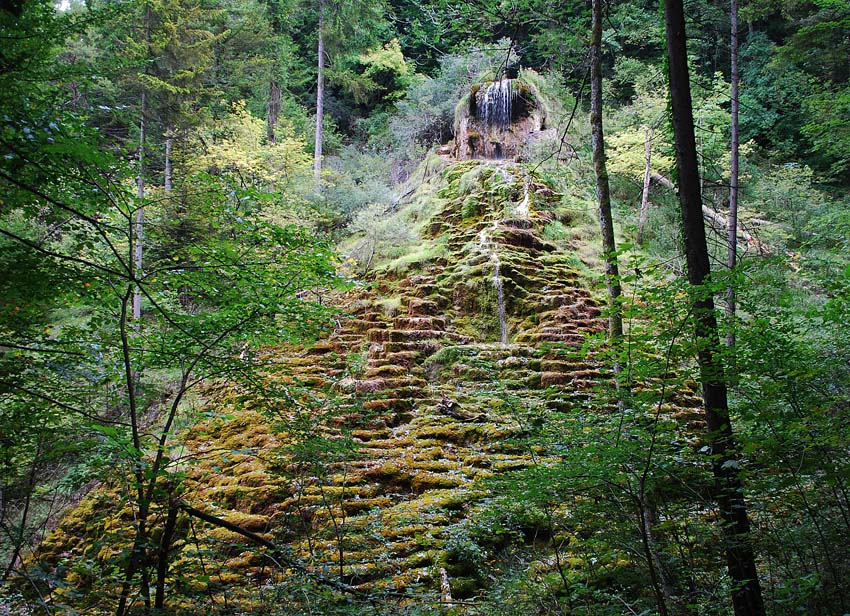
"Tüfels Chilen" - a reamarkable calcareaous tuff quarry in Switzerland

"Tüfels Chilen" - a reamarkable calcareaous tuff quarry in Switzerland

Quarrying in the old days was often carried out at astonishing places, leaving very special formations – and legends – behind. The “Devil’s Church” or Tüfels Chilen in the Canton of Zurich is such a remarkable, combined work of nature and man.

But why a church – and why does the devil appear?

* Continue reading

Posted in Archaeology, Old quarries, Switzerland | Tagged , , , | Leave a comment

Ancient quarries and other archaeology at Gharb Aswan, Egypt

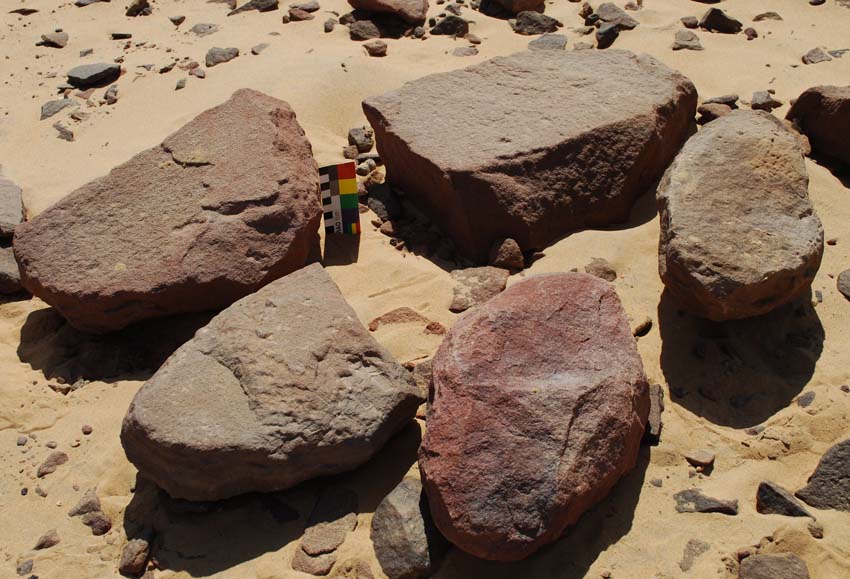
Small stones with great significance: Grinding stone was procured at Gharb Aswan since the Late Palaeolithic period

Small stones with great significance: Grinding stone was procured at Gharb Aswan since the Late Palaeolithic period

The region around the old border- and trading town of Aswan in Upper Egypt features one of the world’s most prominent ancient quarry landscapes. It covers an area of some 100 square kilometres on both banks of the Nile from the Old Aswan Dam in the south to Wadi Kubbaniya in the north.

Within this region are the famous Aswan granite quarries, less well-known ornamental silicified sandstone quarries, recently discovered extensive grinding stone quarries and Palaeolithic tool quarries, as well as building stone quarries in Nubian sandstone. I have recently updated my website to include information about a very significant part of this quarry landscape; at Gharb Aswan just across the Nile from modern Aswan. Information not only includes ancient quarries, but also a range of other exciting archaeological sites and features. Please see Gharb Aswan archaeology.

Posted in Ancient Egypt, Archaeology, Old quarries, Rock art | Tagged , , , , , | Leave a comment

New quarries discovered in Central Norway

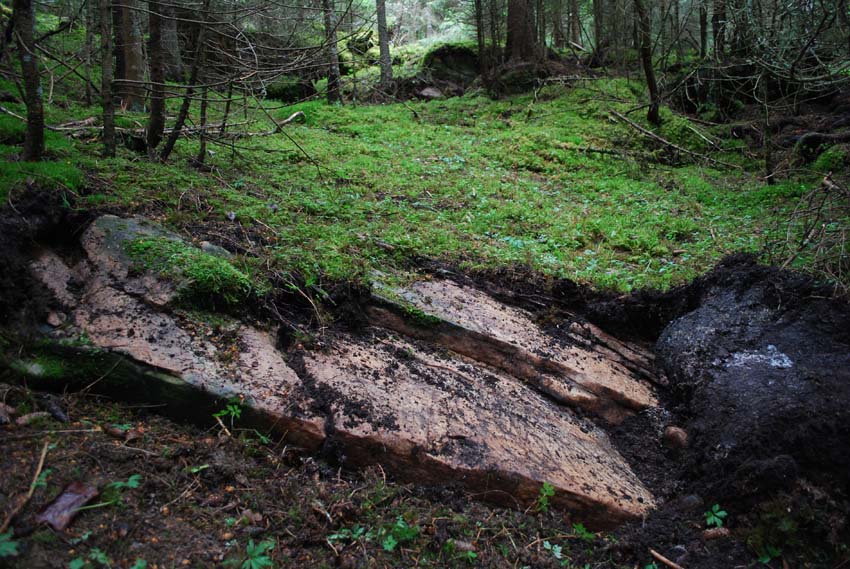
Marble under the moss

Marble under the moss

This summer Tom Heldal (Geological Survey of Norway) and I went on one of our occasional trips to look for old quarries. The aim was to find a marble quarry by the farms Lenn and Fröset in Sparbu close to Steinkjer in Central Norway that allegedly had been used for Nidaros Cathedral in the Middle Ages (AD 1000-1537). Continue reading

Posted in Archaeology, Norway, Old quarries | Tagged , , , , , , , | Leave a comment

New publications 2009-2010

Though published some months ago, I would like to briefly present four of my most recent publications. Two derives from the EU QuarryScapes project, two from a conference last year in Trondheim about new research at Nidaros Cathedral. Continue reading

Posted in Ancient Egypt, Monument conservation, New publications, Norway, Old quarries, Weathering history | Tagged , , , , , , , , , , , | Leave a comment

Cooperation with CSC Conservation Science Consulting, Fribourg

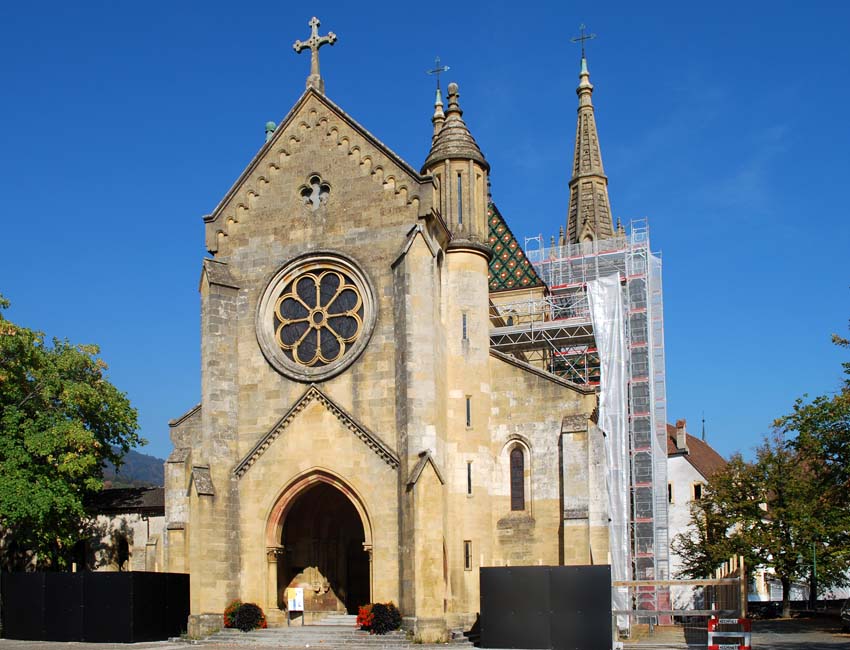
The Collegiate church in Neuchâtel with its yellow Pierre jaune - the stone that characterises the city of Neuchâtel

The Collegiate church in Neuchâtel with its yellow "Pierre jaune". This is the stone that characterises the city of Neuchâtel.

From 2008 to August 2010 I worked for CSC Conservation Science Consulting in Fribourg (CH), which is run by Christine Bläuer and Bénédicte Rousset.

We undertook several exciting projects together, for example mapping the building stones – the Pierre jaune – of the Collegiate church in Neuchâtel. As I decided to establish my own company, we agreed to continue cooperation on a project basis. This  means that I have access to a good laboratory for scientific analyses of stone, mortar and paint.

Please visit the CSC website!

Posted in Monument conservation, New projects, Switzerland | Tagged , , | Leave a comment

Return to murals in the Archbishop’s Palace, Trondheim

Conservation in the Regalia room, Archbishop's Palace (Trondheim) in 2010

Conservation in the Regalia room, Archbishop's Palace (Trondheim) in 2010

One of my first projects after the establishment of “Per Storemyr Archaeology & Conservation Services” in August 2010 implied a return to 17th century murals in the entirely painted Regalia room of the Archbishop’s Palace (Trondheim, Norway). Continue reading

Posted in Monument conservation, New projects, Norway | Tagged , , , , , , , , | Leave a comment