Wadi Abu Subeira, Egypt: Palaeolithic rock art on the verge of destruction

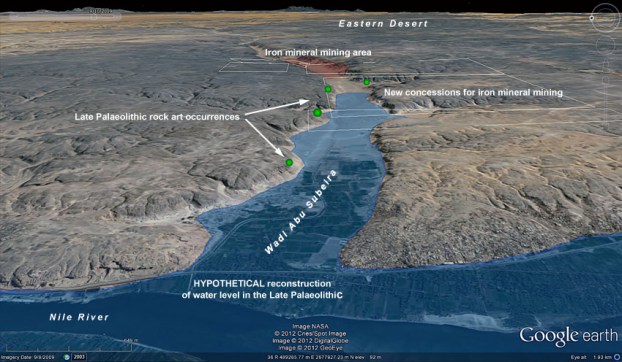
Adel Kamel of the Supreme Council of Antiquities in Aswan recording Late Palaeolithic rock art while heavy trucks are transporting clay for the Egyptian ceramics industry in the background. Photo: Per Storemyr

Emergency in Wadi Abu Subeira: Adel Kamel of the Supreme Council of Antiquities in Aswan recording Late Palaeolithic rock art. In the background: Heavy trucks transporting clay from the numerous mines in the wadi. The clay is used in the Egyptian ceramics industry. Photo: Per Storemyr

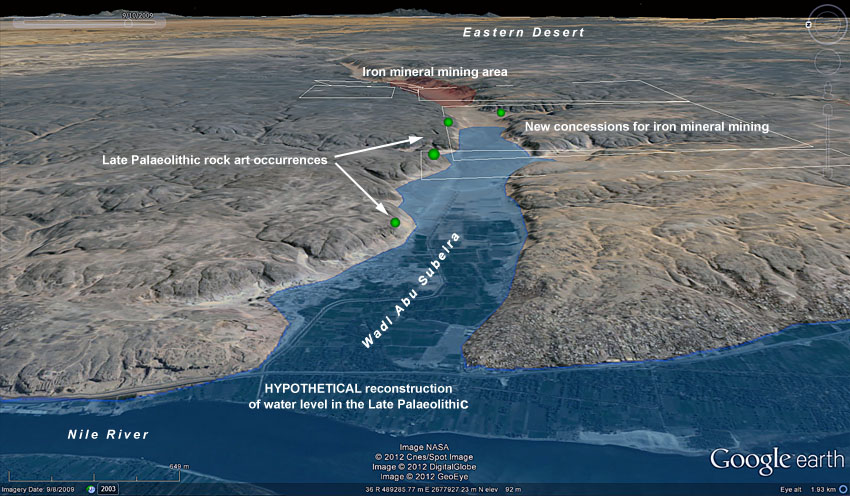
In 2006 one of the most important recent archaeological discoveries in Egypt were made in Wadi (Chor) Abu Subeira near Aswan: A team led by Adel Kelany of the Supreme Council of Antiquities (SCA) found a stunning assemblage of petroglyphs dating to the Late Palaeolithic era (c. 15-20.000 years ago). Ongoing surveys have shown that the initial find was the tip of the iceberg only, which makes Subeira perhaps the richest place of “Ice-Age” art in North Africa, comparable to the site of Qurta, 50 km to the north. Unfortunately, the Subeira rock art is extremely threatened by modern mining, which lately has proven to be even more widespread than previously thought: A truly unique testimony of mankind’s early art is now on the verge of destruction. Continue reading

Posted in Ancient Egypt, Archaeology, Heritage destruction, Rock art | Tagged , , , , | 8 Comments

For those who didn’t really get the Levallois technique


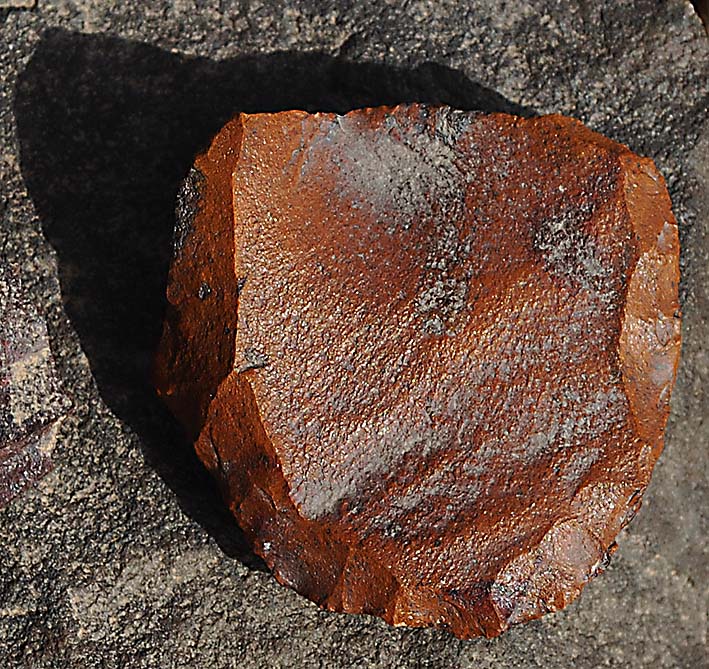
I didn’t make this fine animation, it is the work of José-Manuel Benito Álvarez, check at Wikimedia Commons and at Wikipedia. But I did take the photo, before, I have to admit, I really got it. You see, I’m fond of stone, and the reddish-orange silicified sandstone (quartzite) at Wadi Abu Subeira, near Aswan in Egypt, makes my heart jump… I guess the Levallois core was prepared in the Middle Palaeolithic, quite some thousands of years ago.

Happy Easter!

Posted in Ancient Egypt, Archaeology | Tagged , , | Leave a comment

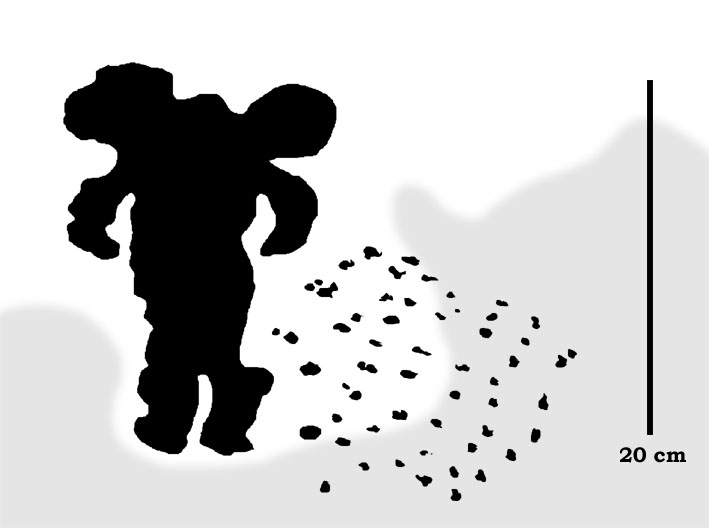
Mickey Mouse in rock art at Gharb Aswan (Egypt): Was he fond of sound?

Mickey Mouse at Gharb Aswan. Tracing by Per Storemyr (after own photo)

Mickey Mouse at Gharb Aswan. Tracing by Per Storemyr (after own photo)

Though Prehistoric rock art certainly had a meaning, its implications usually remain mysterious for us moderns. But sometimes the rock art conveys funny things to speculate on. What about big-eared Mickey Mouse at Gharb Aswan in Upper Egypt: Was he particularly fond of music?

Mickey may have been carved in the Neolithic or Epipalaeolithic period, some 6.000-10.000 years ago. Continue reading

Posted in Ancient Egypt, Archaeology, Rock art | Tagged , , | Leave a comment

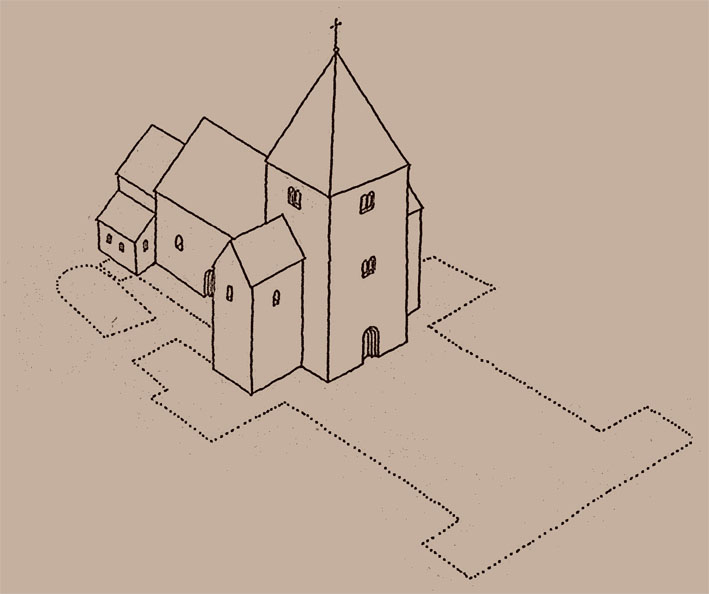
Nidarosdomens steinbrudd: Byggingen av Kristkirken (1070-1100)

Slik kan Kristkirken i Nidaros ha sett ut omkring 1100 (rekonstruksjon av Øystein Ekroll og Karl-Fredrik Keller)

Slik kan Kristkirken i Nidaros ha sett ut omkring 1100. Grunnplanen til dagens Nidarosdom er stiplet. (rekonstruksjon av Øystein Ekroll og Karl-Fredrik Keller)

Denne historien er en liten del av min bok “Nidarosdomens grunnfjell” (2015). Les mer om boken her.

Tenk deg at du for nesten 1000 år siden er engelsk byggmester og har fått i oppdrag å reise en av Norges aller første steinkirker, Kristkirken i Nidaros. Hvordan i all verden skal du ta fatt på oppgaven så langt borte fra Europas steinbyggings-tradisjoner? Tømmer til stillas og takverk er ikke noe problem, ei heller jern til verktøy – her er lokal kunnskap helt på topp. Men stein? Riktignok er det stein overalt, men den er mest hard og skifrig; det er ingen myk kalkstein og ingen romerske ruiner du kan plyndre. Hva gjør du? Continue reading

Posted in Archaeology, Norway, Old quarries | Tagged , , , , , | 6 Comments

St. Basil’s Cathedral in Moscow – on a cold winter day 25 years ago

St. Basils Cathedral in January 1987

St. Basils Cathedral in January 1987

I’m getting thousands of my old slides scanned at the moment. Since I’m not doing it myself, I reckoned that the “post-production” and archiving would cost me a few hours’, perhaps a day’s work. I was utterly wrong. Continue reading

Posted in Monument conservation, Weathering history | Tagged , , | Leave a comment

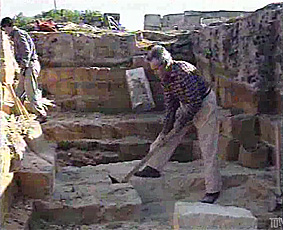
With pickaxe into modern times II: Quarrying of Marés at the Balearic Islands

Screenshot from the film "Piedra de Marés" (Source: http://www.tu.tv/videos/menorca-la-piedra-de-mares)

Screenshot from the film “Piedra de Marés” (Source: Youtube)

As a follow-up of my two recent articles on traditional quarrying of sandstone and soapstone, here is an exciting film about manual extraction of Piedra de Marés at Menorca. Marés is a soft, yellowish biocalcarenite (calcareous sandstone), widely used since Prehistory and characterising the traditional architecture on the Balearic Islands. Read on and watch video…

Posted in Archaeology, Old quarries | Tagged , , | 4 Comments

With pickaxe into modern times: Quarrying of Bernese sandstone (CH)

Was it like this that the quarrymen extracted Bernese sandstone?

Was it like this that the quarrymen extracted Bernese sandstone?

Even until the 1950s the quarrymen in Berne extracted their sandstone using pickaxes. They carved out trenches around the blocks to be removed, not unlike the way their colleagues did 5.000 years ago in ancient Egypt. Why so? Join me on a trip to the Sandsteinlehrpfad in Krauchthal and Wege zu Klee in Ostermundigen to find out – and to learn about Berner Sandstein. It was a most important stone in Switzerland, giving rise to historic quarry centres substantial on a European scale. Continue reading

Posted in Ancient Egypt, Archaeology, Old quarries, Switzerland | Tagged , , , , , , , | 11 Comments

Merry Christmas and Happy New Year!

Thanks to colleagues and partners for 2012 – and, in particular, to the thousands of visitors to my website.

Looking forward to 2012!

Per Storemyr

*

Continue reading

Posted in Other | Leave a comment

“Steinriket Bømlo”: Nettsted om steinbrytning i 10.000 år

(10.000 years of quarrying at Bømlo / for Norwegian readers / English? Try Google Translator)
Slik kan det ha sett ut på Hespriholmen i steinalderen. Kilde: "Steinriket Bømlo"

Slik kan det ha sett ut på Hespriholmen i steinalderen. Kilde: "Steinriket Bømlo"

Her forleden kom jeg over et særs interessant nettsted, nemlig “Steinriket Bømlo” som forteller historien om utnyttelsen av stein på denne ytterst steinrike øya – ytterst i havgapet på Vestlandet. Naturligvis står to av Norges flotteste steinalderlokaliteter i forgrunnen: Øksebruddet på Hespriholmen og pilespissbruddet på Siggjo.

Continue reading

Posted in Archaeology, Norway, Old quarries | Tagged , , , | 1 Comment

Classic Cars, Castro’s Cuba: Conservation in practice

Cuba_Cars_01Slightly off-topic, but how Cubans skilfully care for their classic Plymouths, mFords, Buicks and Pontiacs may be a reminder for anyone dealing with heritage conservation. However, it is not necessarily out of love that the Cubans care for their cars, but of necessity. Will there now be an end to this conservation in practice? Continue reading

Posted in Other | Tagged , , | Leave a comment